Cross-shaped war memorials
Legion v. American Humanist Assn.
In brief
The Supreme Court overturned the Fourth Circuit's judgment and sent the dispute back to that court.
- Where it stands
- Decided
Decided 7-2 · June 20, 2019 · Opinion by Justice Breyer
- What it’s about
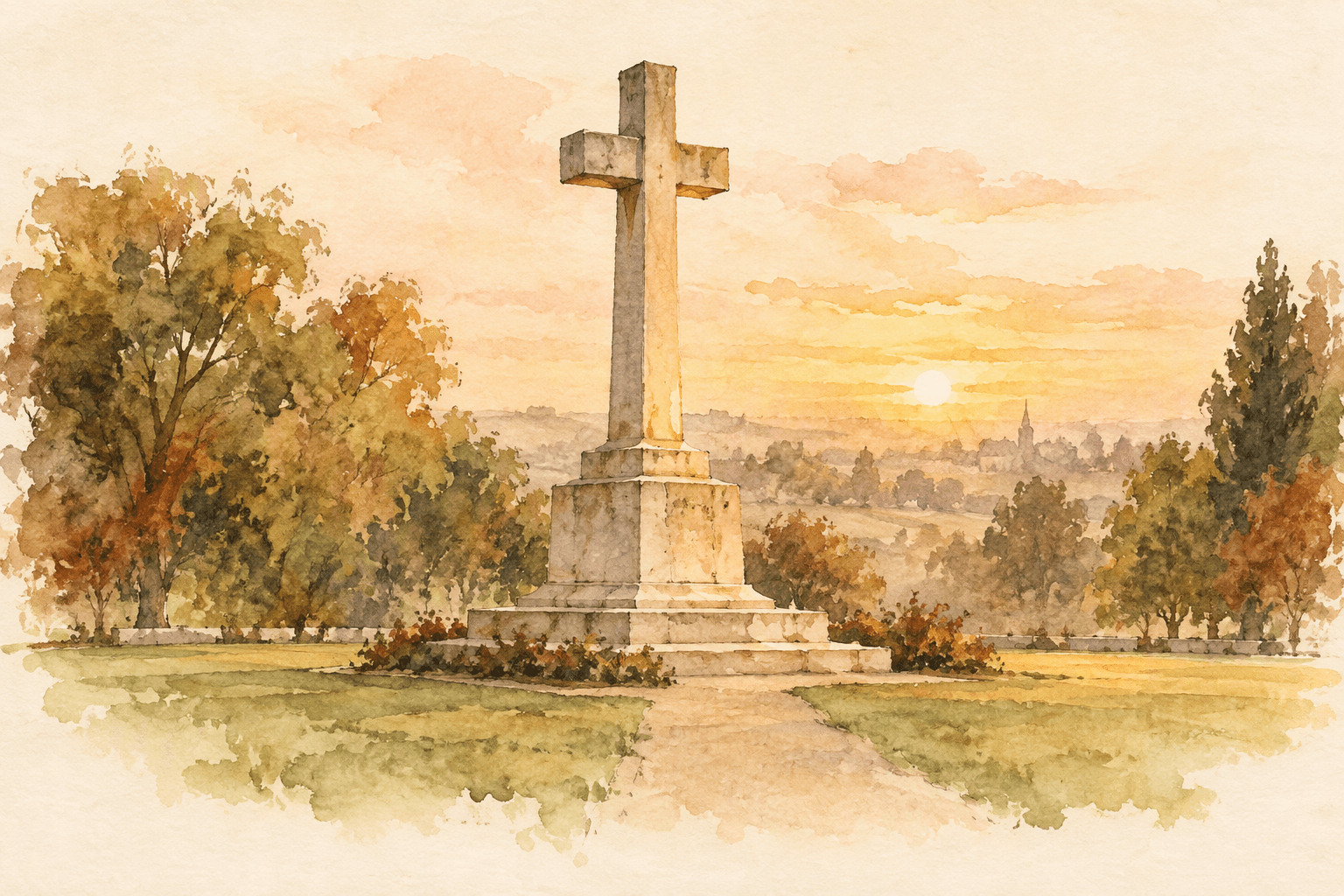
- The case challenged the public display of the cross-shaped Bladensburg Peace Cross, a World War I memorial, under the First Amendment.
- Who it affects
- The Fourth Circuit must revisit the American Humanist Association's challenge after its judgment was overturned.
Summary: written with AI from the case record.
What it's about
The Supreme Court overturned the Fourth Circuit’s ruling that the memorial was unconstitutional and sent the case back to that court (remanded).
Private citizens erected the Peace Cross in 1925 to honor local soldiers who died in World War I. A Maryland state agency now owns and maintains the monument and the traffic island beneath it.
The dispute asks whether the First Amendment allows a state agency to own and maintain a long-standing memorial that uses a religious symbol.
Question presented
1. Whether a 93-year-old memorial to the fallen of World War I is unconstitutional merely because it is shaped like a cross? 2. Whether the constitutionality of a passive display incorporating religious symbolism should be assessed under the tests articulated in Lemon v. Kurtzman, 403 U.S. 602 (1971), Van Orden v. Perry, 545 U.S. 677 (2005), Town of Greece v. Galloway, 134 S. Ct. 1811 (2014), or some other test? 3. Whether, if the test from Lemon v. Kurtzman, 403 U.S. 602 (1971), is applied, the memorial violates that test?
What the Court decided
Holding
The judgment is reversed and remanded. 874 F. 3d 195, reversed and remanded.
- Result
- Reversed
The Court's reasoning
Justice Kavanaugh described the Court's approach as relying on history and tradition, rather than the older Lemon test, to uphold the cross. Justice Breyer said allowing Maryland to display and maintain it posed no threat to religious liberty and tolerance.
The vote
- Joined the judgment
- Concurred in a separate opinion
- Dissented
- Wrote an opinion
- Majority · 5joined the Court's opinion
- Dissenting · 2disagreed with the result
- Ginsburgwrote the dissent
- Sotomayor
From the opinions
“Decades ago, this Court recognized that the Establishment Clause of the First Amendment to the Constitution demands governmental neutrality among religious faiths, and between religion and nonreligion.”
What's next
The Fourth Circuit will take up the case again.
Docket activity
New analysis added
AI analysis generated: Case Briefing
AI analysis generated: Decision Record
Case data updated: summary, question_presented, generation_metadata
Case data updated: question_presented, extraction_metadata
Show 7 moreShow fewer
Opinion added: Opinion
Opinion added: opinion
Court Order added: Certificate of Word Count
Court Order added: Main Document
Court Order added: Proof of Service
Brief added: Petition
Court Order added: Lower Court Orders/Opinions
Sources
Primary materials plus reporting. Best-effort analysis: this explainer relies on a mix of primary materials and trusted secondary sources. Official filings and opinions remain authoritative.