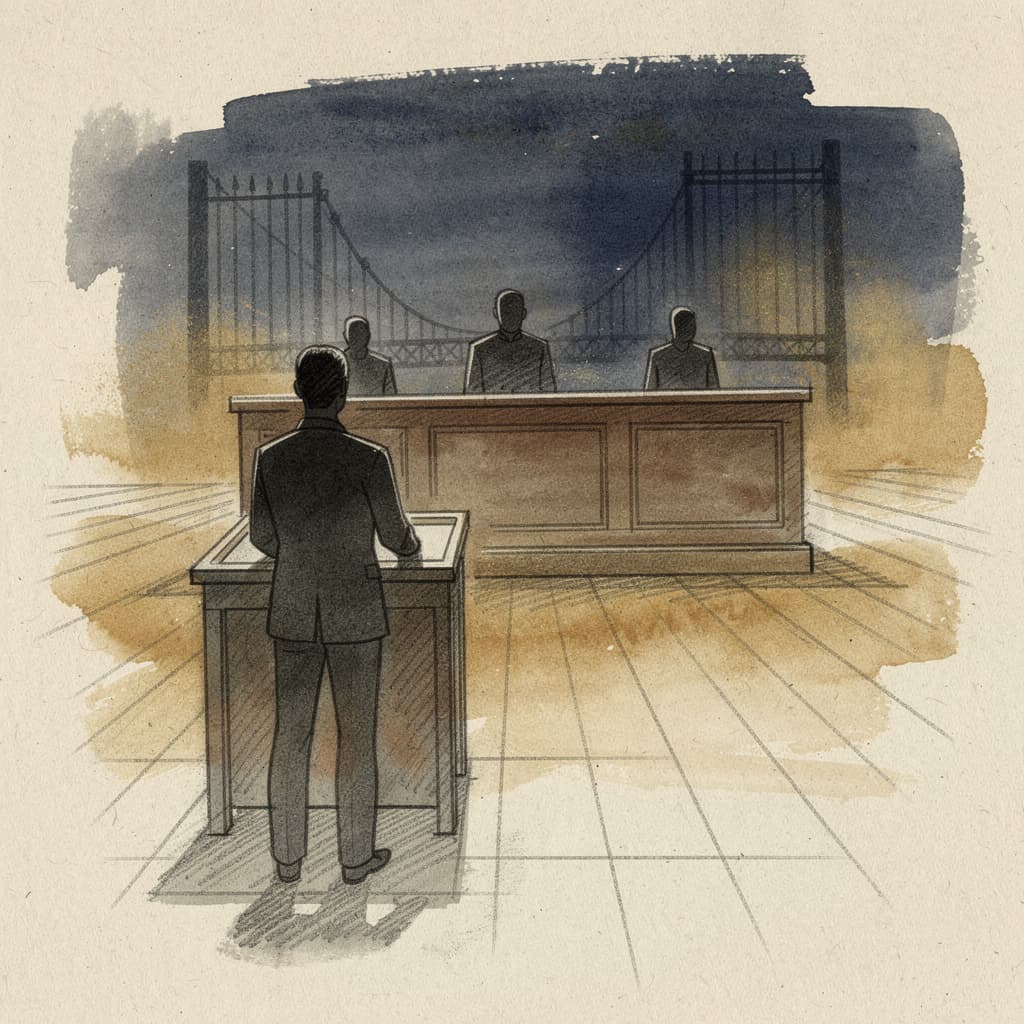
Madhuri Trivedi, Applicant v. U.S. Department of Homeland Security
from the United States Court of Appeals for the Ninth Circuit.
- Status
- Before Arguments
- Appeal from
- United States Court of Appeals for the Ninth Circuit
Briefing
What happened
Madhuri Trivedi has asked the Supreme Court to review a case involving the U.S. Department of Homeland Security. The dispute comes from the Ninth Circuit Court of Appeals and involves legal challenges regarding federal agency actions.
Why it matters
This case could affect how individuals interact with immigration and security agencies. It may clarify the rules for how people can challenge government decisions in federal court.
The big picture
The case sits at the intersection of administrative law and individual rights. It highlights ongoing tensions over how much power federal agencies have when making decisions that impact people's lives.
What the justices said
No substantive justice or advocate reactions are available yet.
The bottom line
The Supreme Court is currently considering whether to take up this dispute between an individual and the Department of Homeland Security.
What's next
The Court will decide whether to grant a full hearing to the case. If they move forward, the next major milestone will be the scheduling of oral arguments.
What is the core dispute in this case?
The case involves a legal challenge by Madhuri Trivedi against the U.S. Department of Homeland Security. It originated from a disagreement handled by the Ninth Circuit Court of Appeals.
What are the real-world consequences of this case?
The outcome could change how people contest decisions made by immigration or security officials. This affects anyone navigating the federal administrative system.
What legal rule is being examined?
The Court is looking at whether the lower court correctly applied federal law to the agency's actions. The specific legal questions are still being determined by the justices.
What is the next procedural step?
The justices must decide if they will hear the case or let the lower court's ruling stand. If they accept it, they will schedule oral arguments.
How does this fit into a broader trend?
This case is part of a trend where the Court examines the limits of executive branch power. It reflects growing interest in how agencies use their authority.
Timeline
Sources
Docket plus reporting.
Refreshed Mar 11, 2026.
Context reporting
Coverage
Related cases