Foster v. Love
In brief
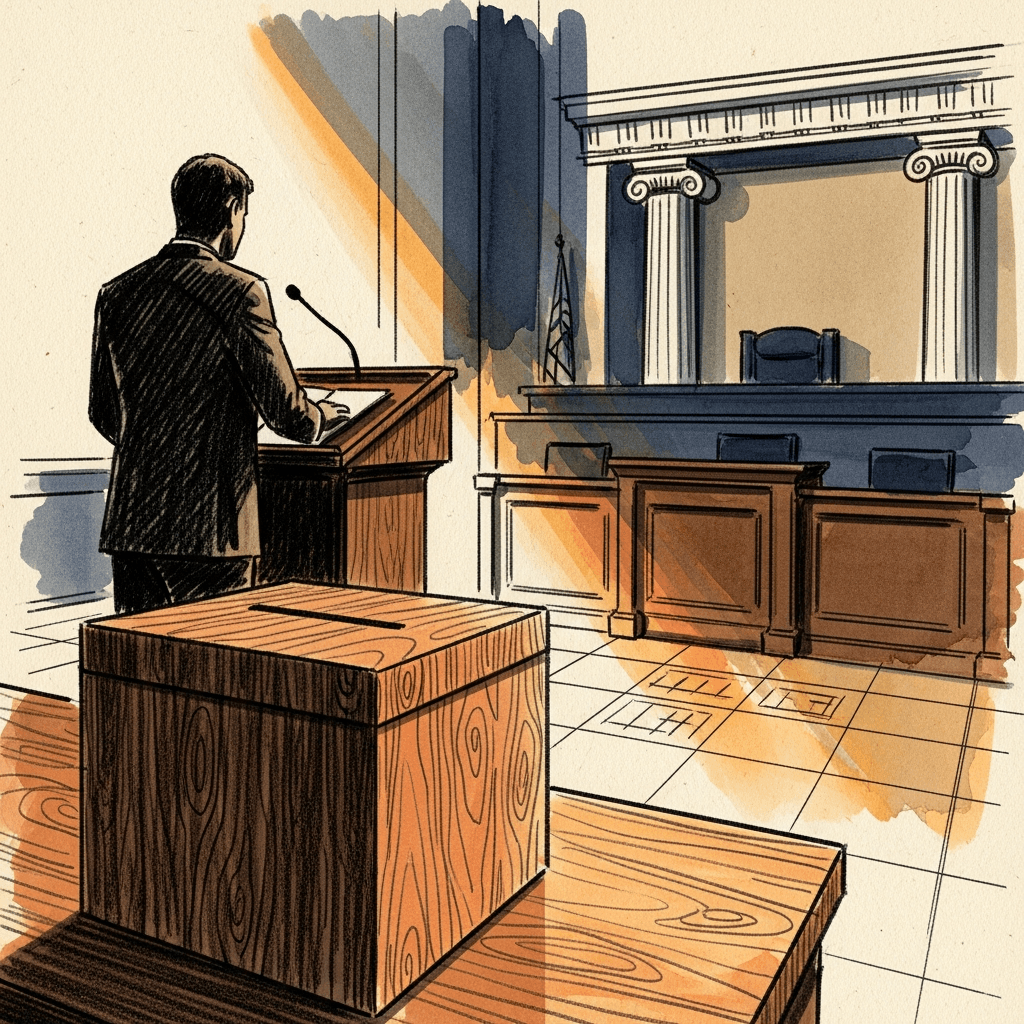
Louisiana could not use an October open primary to finally elect members of Congress before the national November election day.
- Where it stands
- Decided
Decided 9-0 · December 2, 1997 · Opinion by Justice Souter
- What it’s about
- Louisiana's election system allowed congressional candidates to be elected in an October open primary if they received a majority of the vote.
- Who it affects
- Louisiana congressional candidates and voters could not treat the October primary as the final election. Even a candidate with more than half the vote had to be chosen through an election process consistent with the federal November election day.
Summary: written with AI from the case record.
What it's about
The Supreme Court ruled that this system violates federal law because it effectively holds a federal election before the uniform national election day in November.
The case enforced Congress's choice of a single national day for federal elections.
Question presented
Does Louisiana's open primary violate the federal statutes that establish a uniform federal election day?
What the Court decided
Holding
Louisiana's statute conflicts with federal law to the extent that it is applied to select a congressional candidate in October. 90 F. 3d 1026, affirmed.
- Result
- Affirmed
The vote
- Joined the judgment
- Wrote an opinion
- Majority · 9joined the Court's opinion
- Rehnquist
- Stevens
- O'Connor
- Scalia
- Kennedy
- Souterwrote the opinion
- Thomas
- Ginsburg
- Breyer
What's next
The Court finished the case. Louisiana's congressional election procedures had to comply with the federal requirement for a uniform November election day.
Documents
Opinions
Docket activity
New analysis added
AI analysis generated: Impact Analysis
AI analysis generated: Opinion Summary
AI analysis generated: Decision Record
New analysis added
Show 3 moreShow fewer
AI analysis generated: Case Briefing
Case data updated: term, status, opinion_date
Opinion added: Foster
More questions
- What did the Supreme Court rule in Foster v. Love?
- The Court ruled that Louisiana's October open primary could not elect congressional candidates before the federal November election day.
- Who was affected by Foster v. Love?
- Louisiana congressional candidates and voters were affected because an October majority could not end the federal election process.
- What happened after Foster v. Love was decided?
- The Court completed the case. Louisiana had to use congressional election procedures consistent with the federal November election day.
Sources
Primary materials plus reporting. Best-effort analysis: this explainer relies on a mix of primary materials and trusted secondary sources. Official filings and opinions remain authoritative.