Babbitt v. Youpee
In brief
The government could not use amended Section 207 to sharply limit inheritance of these land interests without violating the Fifth Amendment.
- Where it stands
- Decided
Decided 8-1 · January 21, 1997 · Opinion by Justice Stevens
- What it’s about
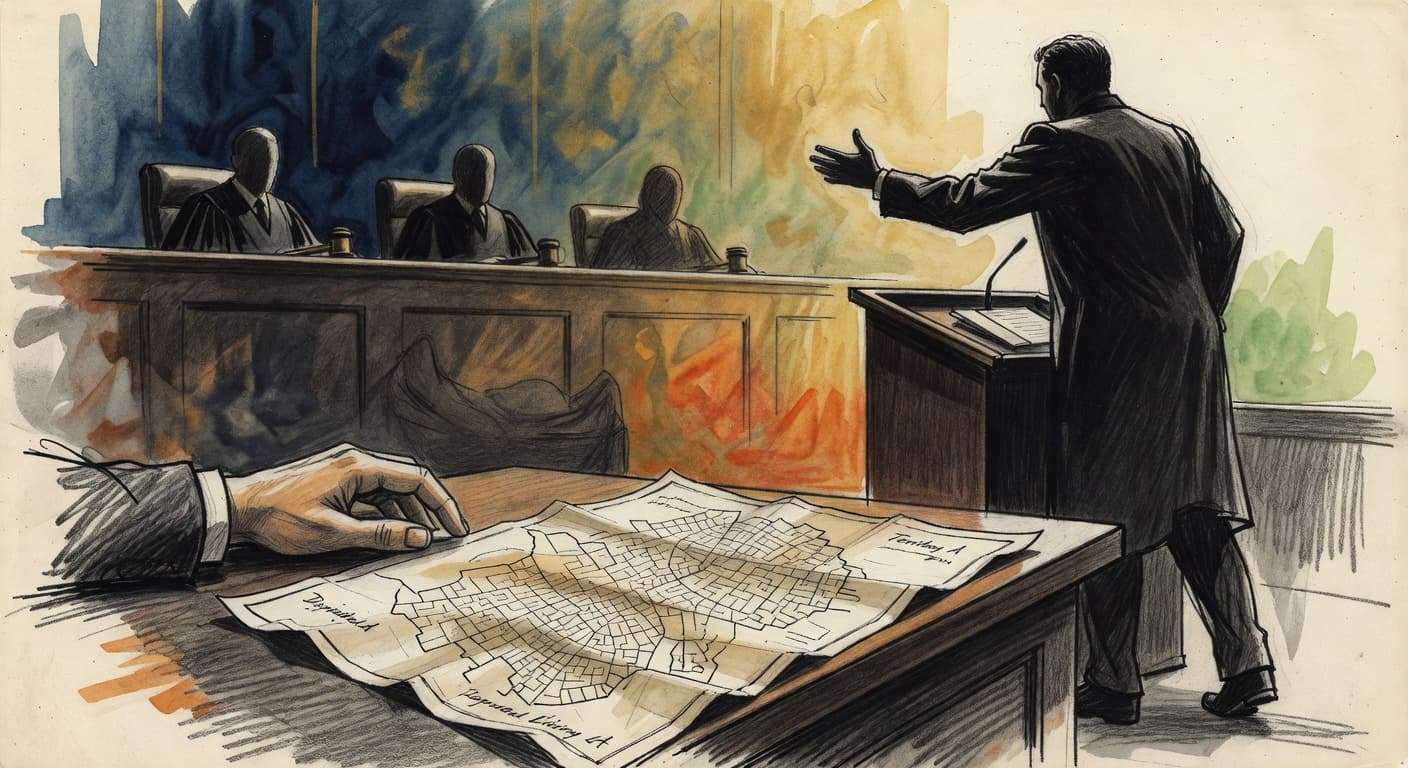
- In an effort to reduce fractionated ownership of Indian lands, Congress amended Section 207 of the Indian Land Consolidation Act to restrict how fractional land interests could be inherited.
- Who it affects
- The decision protected people who own small shares of Indian land from losing control over who inherits their property. For example, an owner could not be barred from leaving a fractional land interest to family members under this provision.
Summary: written with AI from the case record.
What it's about
The Supreme Court ruled that this provision violates the Fifth Amendment's Just Compensation Clause because it severely restricts an individual's right to pass on their property to their heirs.
Congress had amended the law to reduce the number of small, divided ownership interests in Indian lands.
Question presented
Does amended Section 207 of the Indian Land Consolidation Act violate the Fifth Amendment's Just Compensation Clause?
What the Court decided
Holding
Amended § 207 does not cure the constitutional deficiency this Court identified in the original version of § 207. The Court is guided by Irving in determining whether the amendments to § 207 render the provision constitutional. The United States maintains that the amendments moderate the economic impact of the provision and temper the character of the Government's regulation. However, the narrow revisions Congress made to §207, without benefit of this Court's ruling in Irving, do not warrant a disposition different from the one announced and explained in Irving.
The vote
- Joined the judgment
- Dissented
- Wrote an opinion
- Majority · 8joined the Court's opinion
- Rehnquist
- O'Connor
- Scalia
- Kennedy
- Souter
- Thomas
- Ginsburg
- Breyer
- Dissenting · 1disagreed with the result
- Stevenswrote the dissent
From the opinions
“The provision "severely restricts the right of an individual to direct the descent" of property.”
What's next
The Court has finished the case. The amended inheritance restriction cannot be applied as written.
Documents
Opinions
Docket activity
New analysis added
AI analysis generated: Impact Analysis
AI analysis generated: Opinion Summary
AI analysis generated: Decision Record
New analysis added
Show 3 moreShow fewer
AI analysis generated: Case Briefing
Case data updated: term, status, opinion_date
Opinion added: Babbitt
More questions
- What did the Supreme Court rule in Babbitt v. Youpee?
- The Court said amended Section 207 violated the Fifth Amendment's requirement for compensation when government takes property rights.
- Who was affected by Babbitt v. Youpee?
- Owners of fractional interests in Indian land and their heirs were affected. The law limited an owner's ability to choose who would inherit those interests.
- What happens next after Babbitt v. Youpee?
- The case is finished. The amended inheritance restriction cannot be applied as written.
Sources
Primary materials plus reporting. Best-effort analysis: this explainer relies on a mix of primary materials and trusted secondary sources. Official filings and opinions remain authoritative.