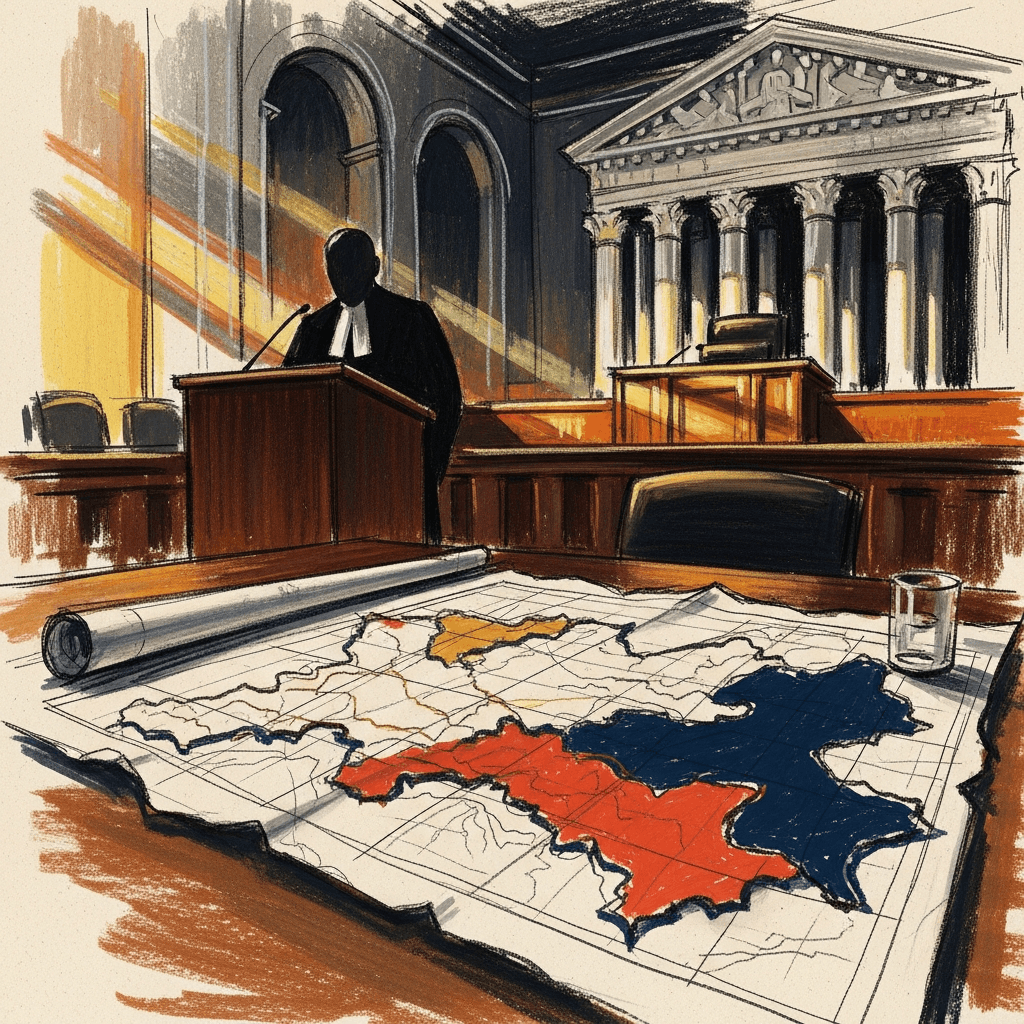
Moore v. Harper
This case involves a request to stay a North Carolina Supreme Court order regarding a partisan gerrymandering challenge. The dispute centers on the application of the Elections Clause to state court authority over congressional maps.
- Status
- Decided
- Appeal from
- Supreme Court of North Carolina
Briefing
What Happened
North Carolina Republican lawmakers are asking the Supreme Court to stop a state court order that blocked their congressional map. The dispute focuses on whether state courts have the power to change rules for federal elections under the U.S. Constitution.
Why It Matters
This case could change how much power state courts have to stop partisan gerrymandering (drawing voting maps to favor one party). If the lawmakers win, state legislatures might have nearly total control over federal election rules without state court oversight.
The Big Picture
The case centers on the 'Elections Clause' of the Constitution and how it divides power between state lawmakers and state judges. It touches on a controversial theory that could limit the role of state constitutions in federal election disputes.
What the Justices Said
No substantive justice or advocate reactions are available yet as the case is currently pending.
The Bottom Line
The Supreme Court must decide if it will step in to block a North Carolina court order regarding congressional redistricting.
What's Next
The next major milestone is oral argument or another scheduling move from the Court. Until then, the parties will file legal briefs explaining their positions on the Elections Clause.
What is the core dispute in this case?
The dispute is about whether the North Carolina Supreme Court can legally block a congressional map drawn by the state legislature. Lawmakers argue that only they have the power to set federal election rules.
What are the real-world consequences for voters?
The ruling could determine which party has an advantage in North Carolina's congressional elections. It may also limit the ability of voters to challenge unfair maps in state courts.
What legal rule is being debated?
The Court is looking at the Elections Clause of the U.S. Constitution. This clause determines how much authority state legislatures have over federal elections compared to state courts.
What is the next procedural step?
The Court will likely schedule oral arguments to hear from both sides. After that, the justices will meet privately to discuss the case and write their opinions.
How does this fit into a broader trend?
This case is part of a growing debate over the 'independent state legislature' theory. This theory suggests state lawmakers have special power over federal elections that state courts cannot easily check.
Timeline
Sources
Docket plus reporting.
Refreshed Mar 11, 2026.