Sackett v. EPA
In brief
Federal Clean Water Act protections for wetlands apply only when wetlands are connected at the surface to covered bodies of water.
- Where it stands
- Decided
Decided 9-0 · May 25, 2023 · Opinion by Justice Alito
- What it’s about
- Michael and Chantall Sackett were blocked from building a home on their property by the EPA, which claimed the land contained protected wetlands.
- Who it affects
- The decision narrows which wetlands need federal Clean Water Act permits. Property owners, builders, farmers, and regulators must now assess whether a wetland has a continuous surface connection to a covered waterway.
Summary: written with AI from the case record.
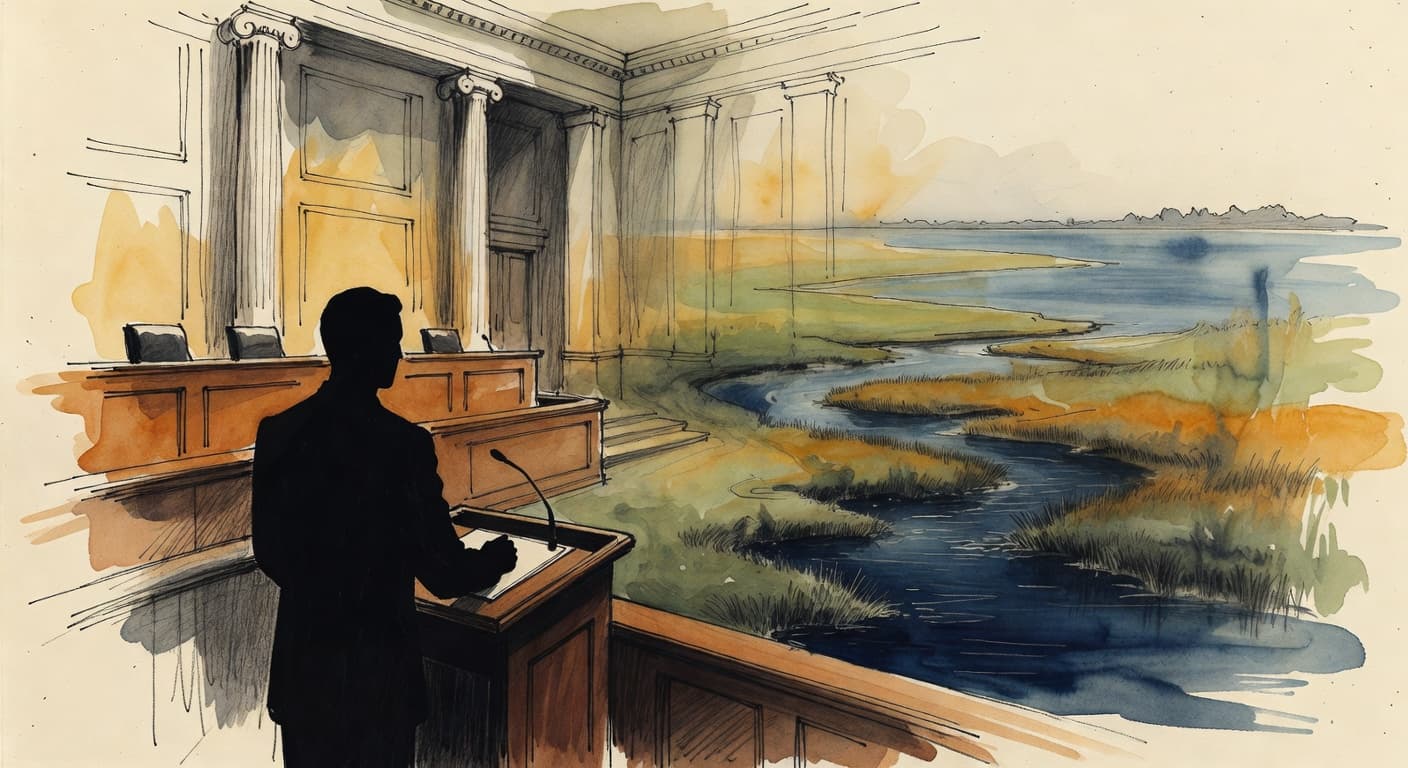
What it's about
The Supreme Court ruled that the Clean Water Act only covers wetlands that have a continuous surface connection to traditional navigable waters.
The case defines the reach of federal water-pollution law over wetlands near rivers, lakes, and other waters.
Question presented
Whether the Ninth Circuit set forth the proper test for determining whether wetlands are "waters of the United States" under the Clean Water Act, 33 U.S.C. § 1362(7).
What the Court decided
The vote
- Joined the judgment
- Concurred in a separate opinion
- Wrote an opinion
From the opinions
““Waters” refers only to geographic features described in ordinary language as “streams, oceans, rivers, and lakes,” plus adjacent wetlands that are “indistinguishable” because of a continuous surface connection.”
What's next
Lower courts and federal agencies must apply the continuous-surface-connection test in future wetlands cases and permitting decisions. The Sackett case returns to the lower court for further proceedings under that standard.
Documents
Docket activity
New analysis added
AI analysis generated: Impact Analysis
AI analysis generated: Opinion Summary
New analysis added
AI analysis generated: Case Briefing
Show 4 moreShow fewer
Case data updated: status, opinion_date
Opinion added: opinion
Brief added: Petition
Brief added: Questions Presented
More questions
- What did the Supreme Court rule in Sackett v. EPA?
- The Court said the Clean Water Act covers wetlands only when they have a continuous surface connection to covered waters. It reversed the Ninth Circuit.
- Who is affected by Sackett v. EPA?
- Property owners, builders, farmers, regulators, and nearby communities may be affected. Some wetlands without a continuous surface connection will not require federal permits.
- What happens next after Sackett v. EPA?
- The case goes back to the lower court. Courts and agencies must use the Court's continuous-surface-connection standard in later cases and permit decisions.
Sources
Primary materials plus reporting. Best-effort analysis: this explainer relies on a mix of primary materials and trusted secondary sources. Official filings and opinions remain authoritative.