Choosing an execution state
United States v. Higgs
In brief
The Court directed the lower courts to name Indiana promptly and wiped out the Fourth Circuit’s temporary pause, but this temporary action did not settle the broader dispute.
- Where it stands
- Decided
Decided · January 15, 2021
- What it’s about
- Higgs challenged whether federal law let a court choose Indiana for his execution after Maryland abolished the death penalty.
- Who it affects
- The action removed the Fourth Circuit’s temporary pause and directed the Maryland district court to promptly name Indiana as the execution state. The Supreme Court did not decide the broader legal question or any disputed facts.
Summary: written with AI from the case record.
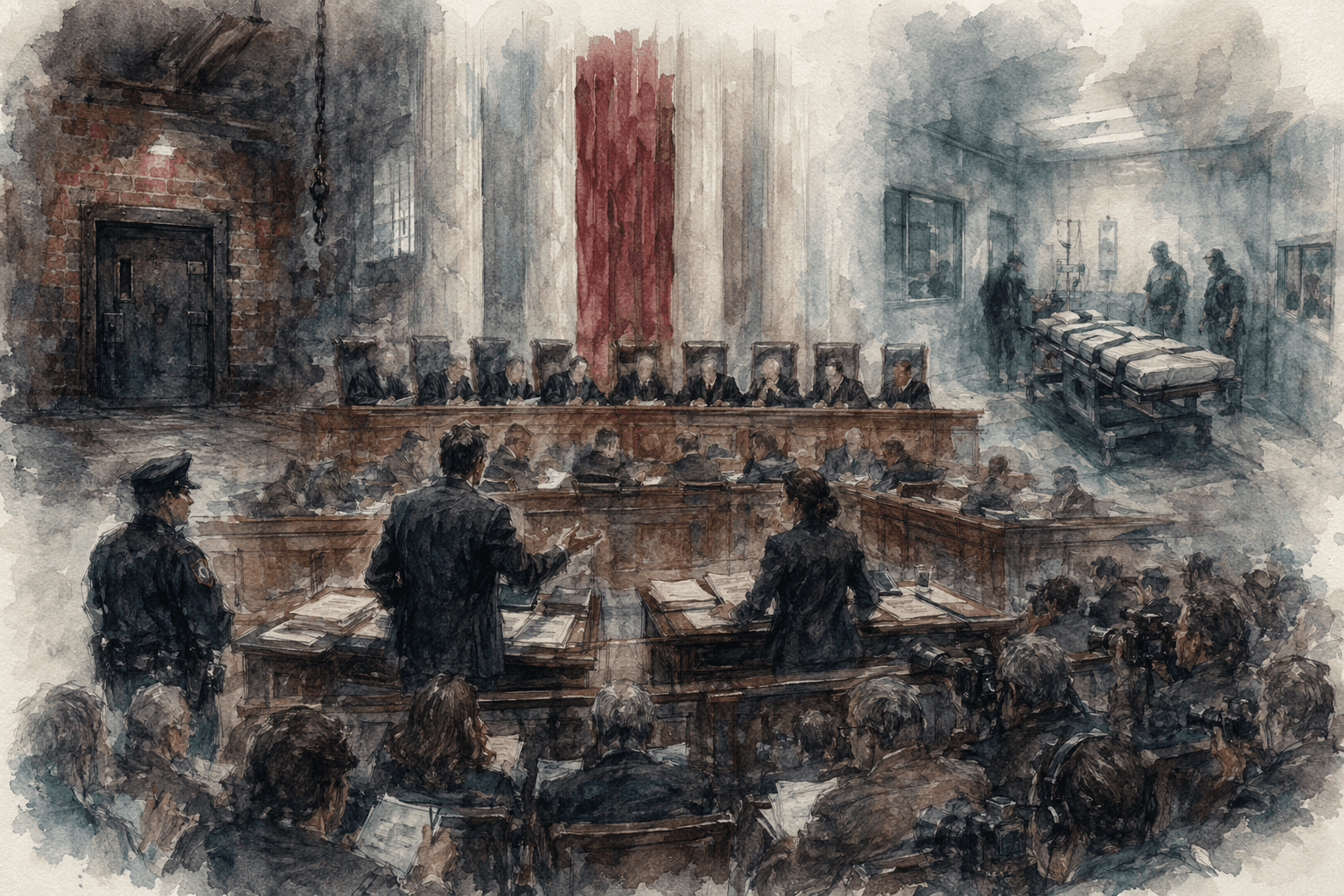
What it's about
The Supreme Court overturned the district court’s order, sent the case to the Fourth Circuit (remanded it) with instructions to return it to the district court to promptly choose Indiana, and wiped out the appeals court’s pause on the execution (stay).
The case came amid the federal government’s return to executions after a 17-year pause and broader disputes over the federal death-penalty law.
Question presented
Whether, after Maryland abolished the death penalty, federal law allowed the court to designate another state, Indiana, to carry out his execution?
What the Court decided
Holding
Petition for a writ of certiorari before judgment granted. The petition for writ of certiorari before judgment to the United States Court of Appeals for the Fourth Circuit is granted. The December 29, 2020 order of the United States District Court for the District of Maryland is reversed, and the case is remanded to the Court of Appeals with instructions to remand to the District Court for the prompt designation of Indiana under 18 U. S. C. §3596(a). The application to vacate stay presented to THE CHIEF JUSTICE and by him referred to the Court is granted. The January 13, 2021 order of the Court of Appeals granting a stay is vacated. JUSTICE KAGAN would deny the petition for writ of certiorari before judgment and the application. Justice Breyer, dissenting. JUSTICE SOTOMAYOR, dissenting.
From the opinions
“This unprecedented rush of federal executions has predictably given rise to many difficult legal disputes.”
What's next
The Fourth Circuit is to send the case to the Maryland district court, which was instructed to promptly name Indiana under 18 U.S.C. §3596(a). The temporary order did not settle the broader legal and factual questions.
Documents
Docket activity
Case data updated: summary, question_presented, generation_metadata
New analysis added
AI analysis generated: Case Briefing
AI analysis generated: Decision Record
Case data updated: status, opinion_date
Show 4 moreShow fewer
Opinion added: Opinion
Court Order added: Lower Court Orders/Opinions
Brief added: Petition
Brief added: Questions Presented
More questions
- What was United States v. Higgs about?
- It asked whether federal law let a court choose Indiana as the state for Dustin Higgs’s execution after Maryland abolished the death penalty.
- What did the Supreme Court do in Higgs?
- It agreed to hear the case before the appeals court ruled and overturned the Maryland district court’s order. It sent the case to the Fourth Circuit (remanded it there).
- Did the Court finally decide whether Indiana could carry out the execution?
- No. The temporary action did not decide the broader legal question or any disputed facts.
- Was the Fourth Circuit’s temporary pause left in place?
- No. The Court wiped out that temporary pause (vacated the stay order).
- What happens next in United States v. Higgs?
- The Fourth Circuit is to send the case to the Maryland district court, which was instructed to promptly name Indiana under 18 U.S.C. §3596(a).
Sources
Primary materials plus reporting. Best-effort analysis: this explainer relies on a mix of primary materials and trusted secondary sources. Official filings and opinions remain authoritative.