Beers v. Barr
In brief
The Supreme Court wiped out the Third Circuit's ruling and sent the case back to be thrown out because it was no longer live; it did not decide the Second Amendment issue here.
- Where it stands
- Decided
Decided · May 18, 2020
- What it’s about
- The Court denied review of a challenge to a federal firearms ban for people who have previously been involuntarily committed for mental-health treatment. The denial left the Third Circuit’s ruling against the petitioner in place.
- Who it affects
- The Third Circuit's ruling was wiped out in Beers's case, but the Supreme Court left the Second Amendment question undecided here.
Summary: written with AI from the case record.
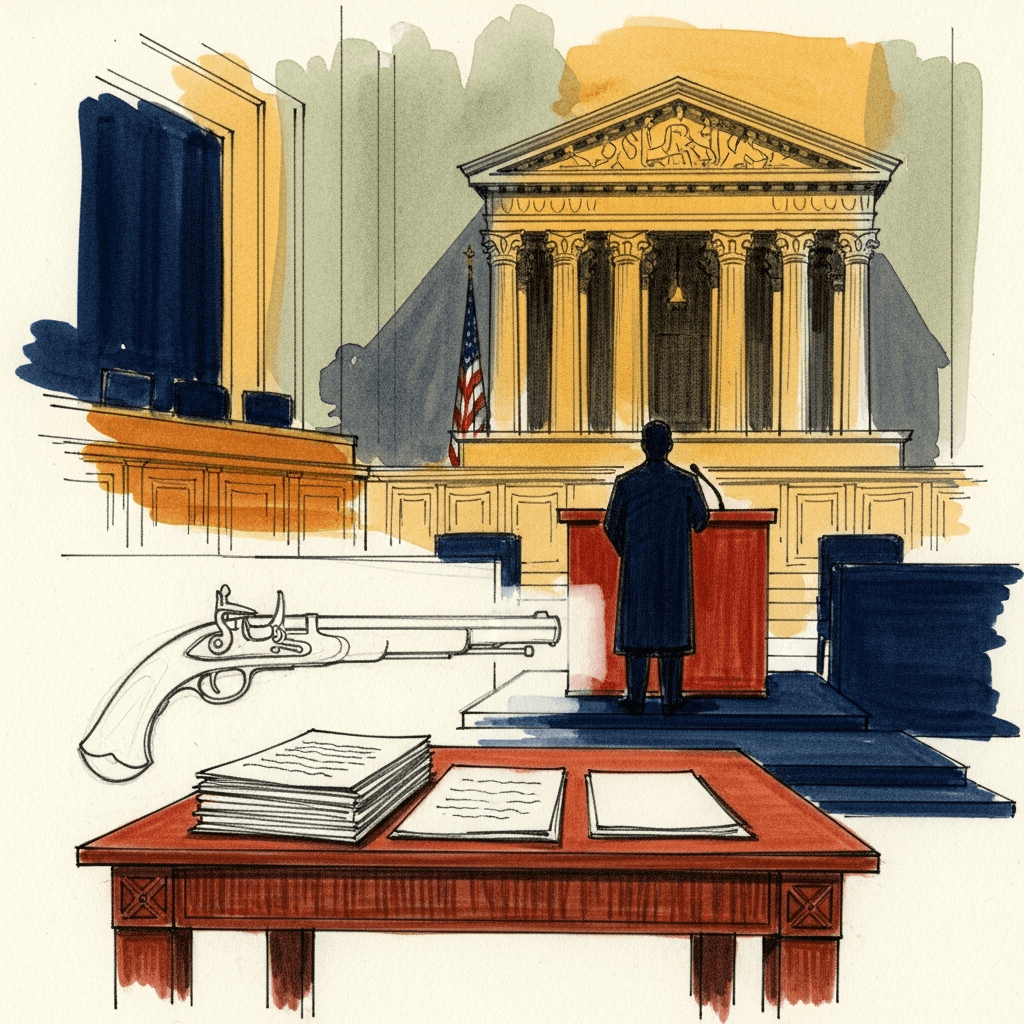
What it's about
The dispute concerned a federal firearms ban for people with past involuntary mental-health commitments.
Question presented
Whether the government can permanently strip a law-abiding citizen of their Second Amendment rights based solely on a past involuntary mental health commitment.
What the Court decided
Holding
Petition GRANTED. Judgment VACATED and case REMANDED with instructions to dismiss the case as moot. See United States v. Munsingwear, Inc. , 340 U. S. 36 (1950).
- Result
- Vacated
The Court's reasoning
The order says the dispute was no longer live (moot), so it wiped out the Third Circuit's ruling and told that court to throw out the case instead of deciding the constitutional question.
What's next
The Third Circuit must throw out the case (dismiss it) because it is no longer a live dispute (moot), following the Supreme Court's instructions.
Documents
Docket activity
New analysis added
AI analysis generated: Case Briefing
New analysis added
New analysis added
New analysis added
Show 7 moreShow fewer
New analysis added
New analysis added
New analysis added
New analysis added
New analysis added
New analysis added
New analysis added
Sources
Primary materials plus reporting. Best-effort analysis: this explainer relies on a mix of primary materials and trusted secondary sources. Official filings and opinions remain authoritative.