Banks v. Illinois
In brief
The Supreme Court declined review, leaving the Illinois court's result in place without deciding the merits of Banks's public-trial claim.
- Where it stands
- Decided
Decided · May 26, 2020
- What it’s about
- The Supreme Court declined to hear Banks’s appeal, leaving the Illinois court’s ruling in place. The Court did not decide the merits of Banks’s claim that closing the courtroom during jury selection violated his Sixth Amendment right to a public trial.
- Who it affects
- Banks is directly affected because the Illinois court's decision remains in effect. More broadly, the Court's action did not set a new nationwide rule for people whose courtrooms are closed during jury selection.
Summary: written with AI from the case record.
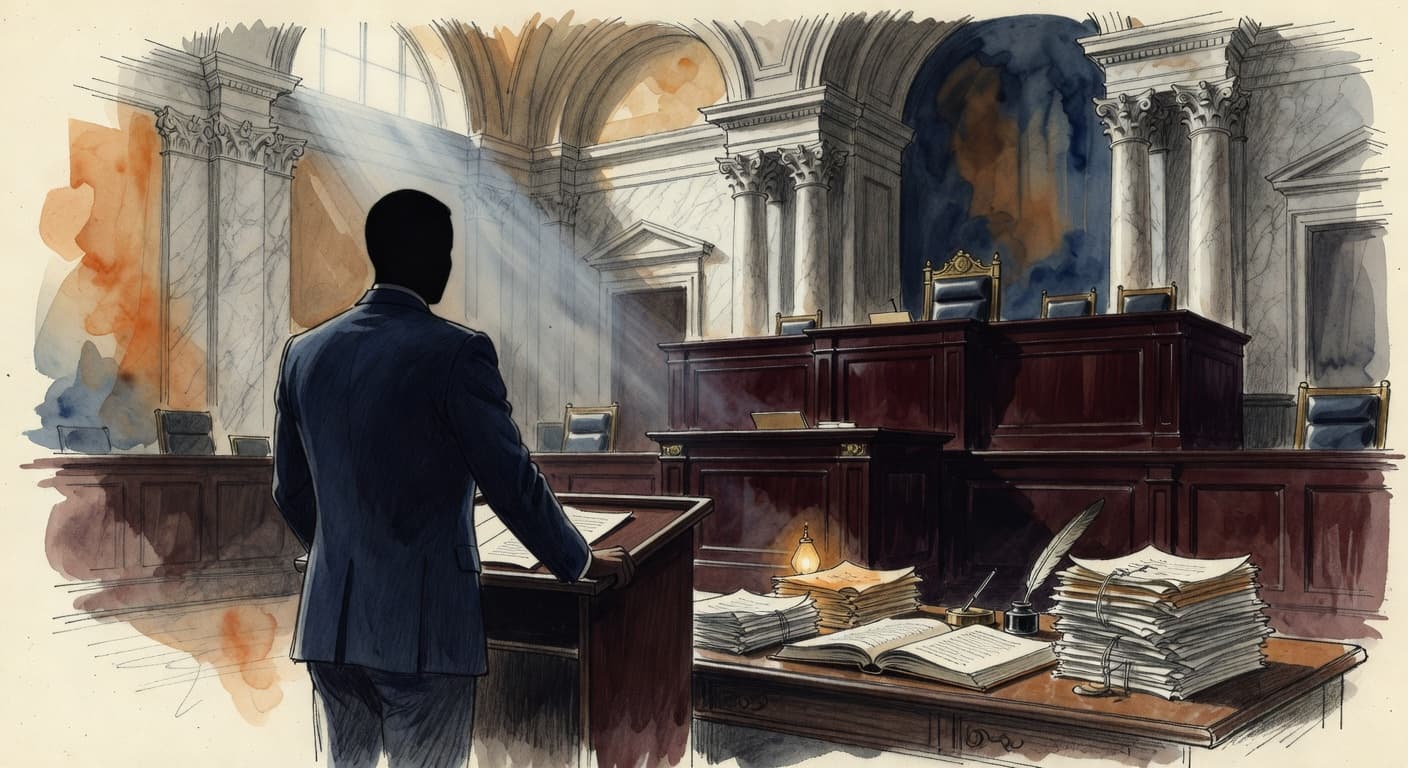
What it's about
The petition raised the question of when a courtroom may be closed to the public during jury selection.
Question presented
Whether the Sixth Amendment right to a public trial, as applied to the States through the Fourteenth Amendment, is violated when a trial court excludes the public from the courtroom during jury selection without making specific findings that closure is necessary to protect an overriding interest?
What the Court decided
What's next
The Supreme Court has finished this docket action. The Illinois court's result remains in place.
Documents
Opinions
Key filings
Docket activity
New analysis added
AI analysis generated: Case Briefing
Case data updated: summary, question_presented, generation_metadata
Opinion added: Banks
Brief added: Petition
More questions
- What did the Supreme Court rule in Banks v. Illinois?
- The Court declined to hear the appeal. It did not decide the merits of Banks's claim about courtroom closure during jury selection.
- Who is affected by Banks v. Illinois?
- Banks remains subject to the Illinois court's result. The action did not create a new nationwide rule for other public-trial claims.
- What happens next in Banks v. Illinois?
- The Supreme Court's docket action is complete. The Illinois court's result stays in place.
Sources
Primary materials plus reporting. Best-effort analysis: this explainer relies on a mix of primary materials and trusted secondary sources. Official filings and opinions remain authoritative.