Moreno v. United States
In brief
The Supreme Court refused to hear Moreno's case, leaving the Ninth Circuit's ruling against him in place without deciding the passport question.
- Where it stands
- Decided
Decided · May 4, 2020
- What it’s about
- The Supreme Court denied review, leaving the Ninth Circuit's ruling against Moreno in place. The Court did not decide on the merits whether a U.S. passport is conclusive proof of citizenship.
- Who it affects
- The Ninth Circuit's ruling against Moreno remains in place, but this order did not decide whether a U.S. passport conclusively proves U.S. citizenship.
Summary: written with AI from the case record.
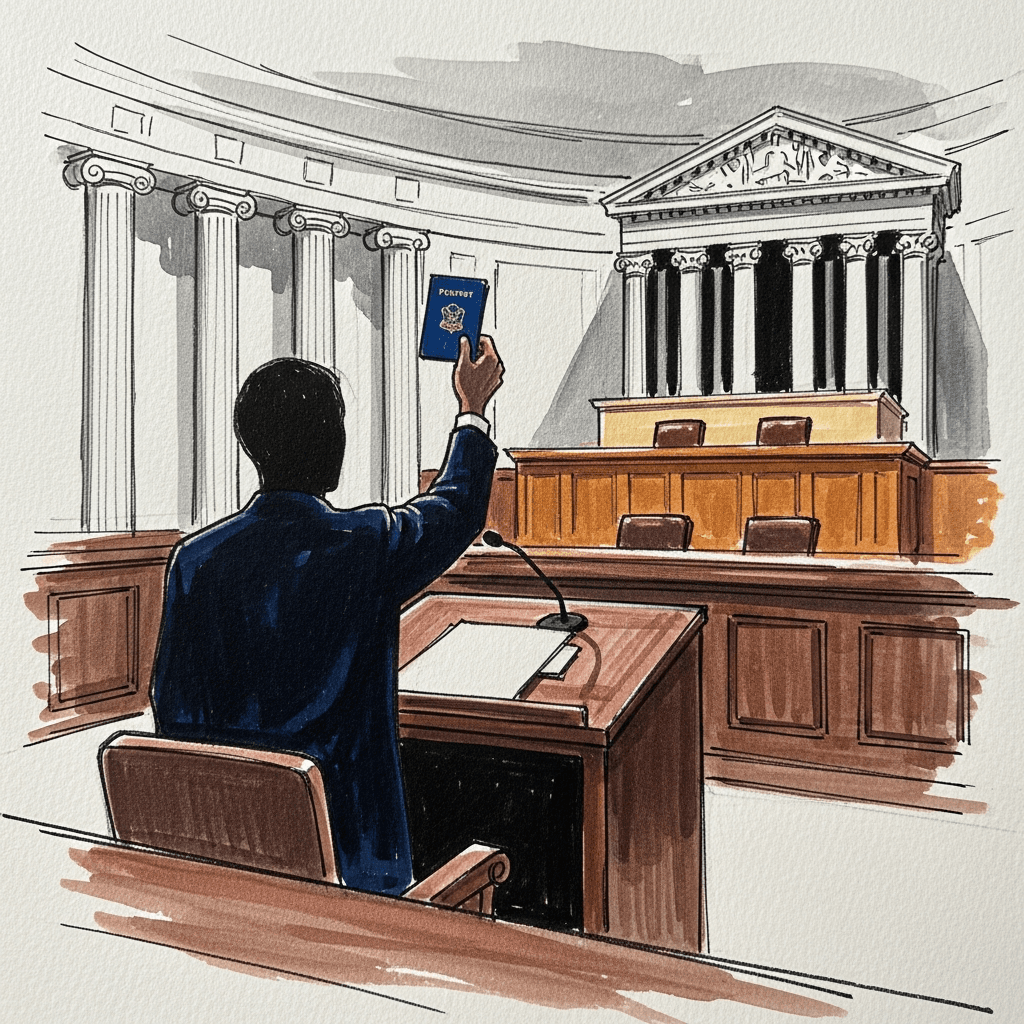
What it's about
The case came to the Supreme Court through a petition asking it to review a Ninth Circuit decision.
Question presented
Whether a passport issued by the Secretary of State serves as definitive, unchallengeable proof of the holder's United States citizenship.
What the Court decided
Holding
Petition DENIED.
What's next
The Supreme Court's action on this docket is complete. The Ninth Circuit's ruling remains in place for Moreno, and this order provides no Supreme Court decision on the passport question.
Documents
Opinions
Key filings
Docket activity
New analysis added
AI analysis generated: Case Briefing
New analysis added
New analysis added
New analysis added
Show 7 moreShow fewer
New analysis added
New analysis added
New analysis added
New analysis added
New analysis added
New analysis added
New analysis added
Sources
Primary materials plus reporting. Best-effort analysis: this explainer relies on a mix of primary materials and trusted secondary sources. Official filings and opinions remain authoritative.