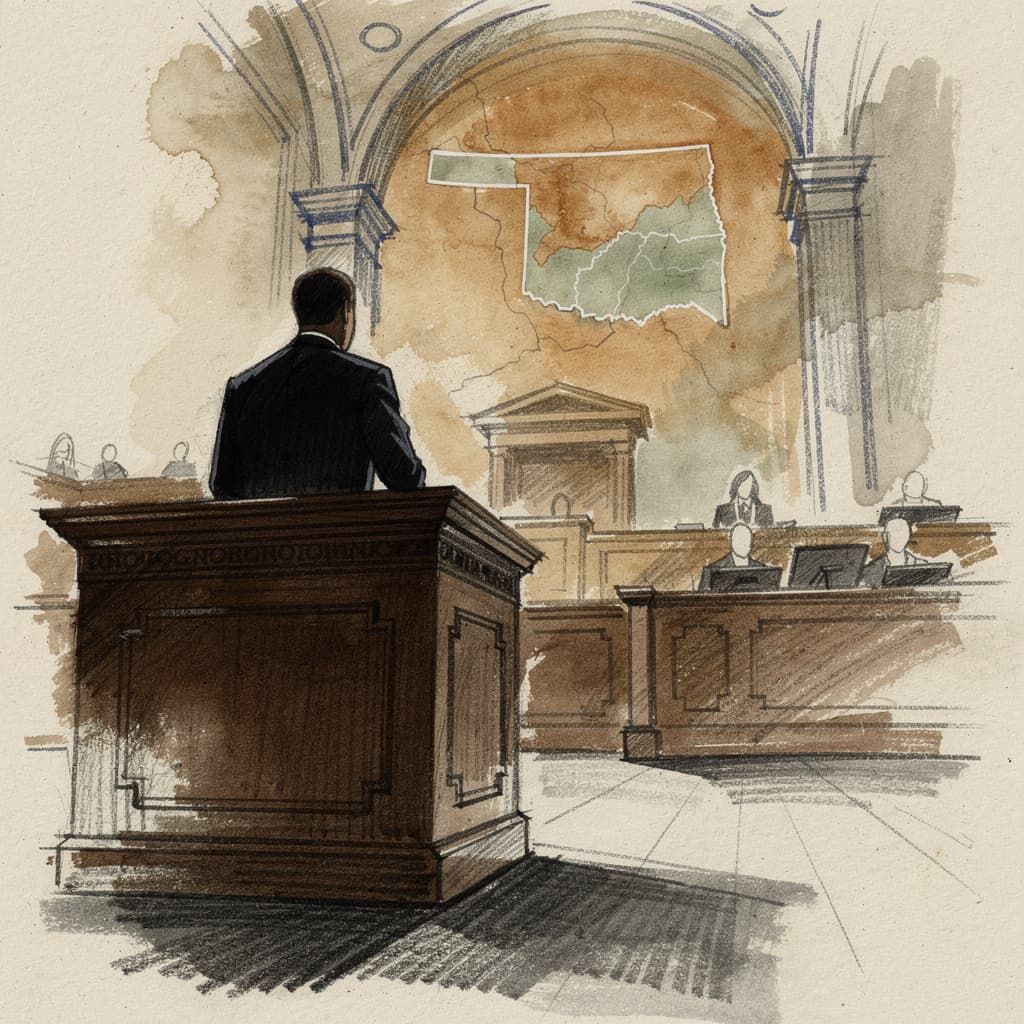
Bush v. Sharp
This case involves a petition for a writ of certiorari submitted to Justice Sotomayor regarding a decision from the United States Court of Appeals for the Tenth Circuit.
- Status
- Decided
- Appeal from
- United States Court of Appeals for the Tenth Circuit
- Decision released
- May 18, 2020
Decision briefing
The case in plain English
What Happened
The Supreme Court addressed whether the State of Oklahoma could prosecute a Native American person for a crime committed on land that was historically part of the Muscogee (Creek) Nation. The Court looked at whether the reservation had ever been officially dissolved by Congress. On May 18, 2020, the Court issued a decision in this case alongside other similar legal disputes regarding tribal land status.
Why It Matters
This case determines who has the power to enforce laws on millions of acres of land in Oklahoma. If the land is considered a reservation, federal and tribal authorities have jurisdiction (legal power) over crimes involving Native Americans rather than the state. This affects thousands of past criminal convictions and future law enforcement duties.
The Big Picture
The dispute is part of a long history of legal battles over tribal sovereignty and the promises made in 19th-century treaties. It centers on whether Congress clearly intended to end the reservation status of the Muscogee (Creek) Nation when Oklahoma became a state. The outcome clarifies the boundaries of tribal authority in the modern era.
What the Justices Said
The Court issued its ruling on May 18, 2020, following a petition for certiorari (a request for the Court to review the case) that was submitted to Justice Sotomayor.
The Bottom Line
The Supreme Court ruled on whether the Muscogee (Creek) Nation reservation still exists for the purposes of criminal law. This decision shifts the balance of power between state, federal, and tribal governments in Oklahoma.
What's Next
Lower courts and government agencies must now apply this ruling to other pending cases and past convictions. State and tribal leaders will likely need to negotiate new agreements for policing and taxation. Observers are watching how other tribes in Oklahoma might be affected by this legal precedent.
What was the core dispute in this case?
The case focused on whether Oklahoma had the right to prosecute a Native American for a crime on tribal land. It turned on whether the Muscogee (Creek) Nation reservation was ever officially dissolved by Congress.
What are the real-world consequences of this ruling?
The ruling impacts who can arrest and prosecute people for crimes across a large portion of Oklahoma. It may lead to the overturning of past state convictions and requires new cooperation between tribal and federal police.
What legal rule did the Court examine?
The Court examined the rule that only Congress has the power to disestablish (officially end) an Indian reservation. The justices had to decide if historical laws regarding Oklahoma's statehood met that high standard.
What is the next procedural step after this decision?
Affected parties and lower courts must now implement the ruling in specific criminal and civil cases. State and tribal officials will likely work on intergovernmental agreements to manage the transition of authority.
How does this fit into a broader trend?
This case is part of a broader trend of the Supreme Court re-evaluating tribal treaty rights and sovereignty. It reflects a growing legal focus on whether the government must honor old promises made to Native American nations.
Where things stand
Timeline
Source note
How this page is sourced
Official case materials anchor this page. Reporting is used only to add context and explain the dispute in plain English.
Page data last refreshed Mar 31, 2026.
Context reporting
Primary materials
Documents & resources
Recent coverage
In the news
More to watch