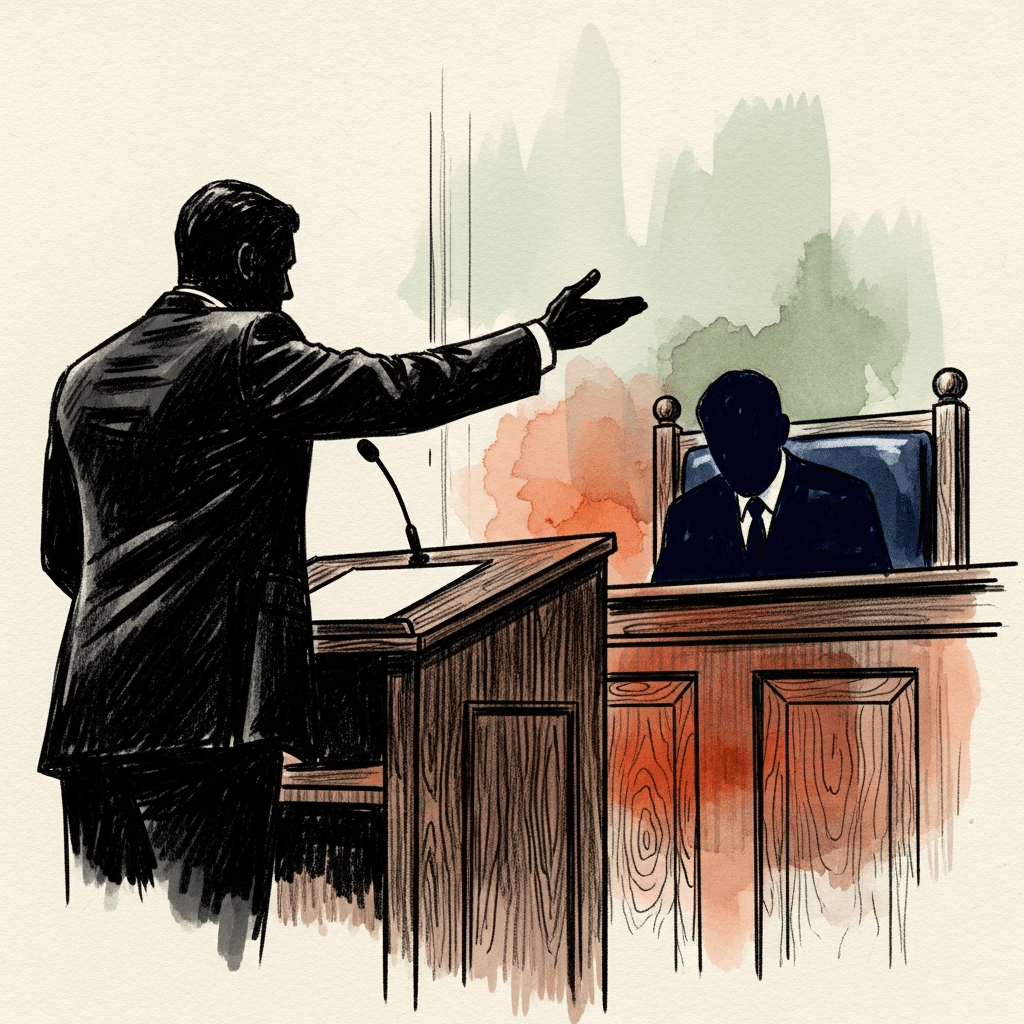
Illustration for Campbell v. United States
Docket 19-6926

Campbell v. United States

This case asks whether a defendant's constitutional right to confront witnesses is violated when a trial court stops them from cross-examining accomplices about potential sentencing benefits they might get for cooperating. It also asks what standard of review appellate courts should use for these violations.

Status
Decided
Appeal from
United States Court of Appeals for the Ninth Circuit
Decision released
May 26, 2020

Decision briefing

The case in plain English

Start with the holding, why it matters, and the strongest takeaways from the opinions.

What Happened

The Supreme Court declined to hear this case, leaving in place the lower court's decision regarding a defendant's right to question witnesses. The case centered on whether a trial court violates the Constitution by stopping a defendant from asking accomplices about the sentencing deals they hope to get for testifying. It also questioned how higher courts should review these types of legal mistakes.

Why It Matters

This case affects how much information a jury gets to hear about why a witness might be lying to help the government. If defendants cannot ask about secret deals or lighter sentences, they may not be able to show that a witness has a reason to be biased. This impacts anyone facing trial where the main evidence comes from people who were also involved in the crime.

The Big Picture

The Sixth Amendment gives every person the right to confront the witnesses against them, which usually includes cross-examination (questioning the witness in court). This case is part of a long-running debate over how much power judges have to limit that questioning. It highlights the tension between a judge's control over the courtroom and a defendant's right to a fair trial.

What the Justices Said

The Supreme Court denied the petition for a writ of certiorari (a request to hear the case) on May 26, 2020. No substantive justice or advocate reactions are available yet.

The Bottom Line

The Supreme Court chose not to rule on whether blocking questions about witness sentencing benefits violates the Constitution.

What's Next

Because the Court did not take the case, the rules used by the Ninth Circuit Court of Appeals will remain in place for that region. Lawyers in other parts of the country will continue to argue over whether these limits on questioning are allowed. Watch for how lower courts, agencies, or affected parties respond to the ruling.

What was the core dispute in this case?

The case focused on whether a defendant can ask accomplices about the specific sentencing benefits they expect for cooperating. The defendant argued that blocking these questions violates the Sixth Amendment right to confront witnesses.

What are the real-world consequences of this decision?

Defendants in some areas may be unable to fully expose the motives of witnesses who testify against them. This could lead to juries not knowing that a witness is hoping for a shorter prison sentence in exchange for their testimony.

What legal rule was being debated?

The debate involved the Confrontation Clause and whether appellate courts should use 'de novo' review (starting from scratch) or 'abuse of discretion' (giving the trial judge more leeway).

What is the next procedural step for this case?

Since the Supreme Court denied the petition, the case is effectively over for the petitioner. Legal experts will now monitor how other lower courts handle similar disputes over witness cross-examination.

How does this fit into a broader trend?

This case reflects ongoing uncertainty about the limits of the Confrontation Clause in modern trials. It shows that the Supreme Court is not yet ready to set a single national standard for questioning witnesses about sentencing deals.

Where things stand

Timeline

Key court milestones at a glance.

Case Accepted
Arguments AheadUpcoming
Decision ReleasedMay 26, 2020

Source note

How this page is sourced

Official case materials anchor this page. Reporting is used only to add context and explain the dispute in plain English.

Page data last refreshed Mar 31, 2026.

Primary materials

Documents & resources

Briefs, opinions, transcripts, and audio when they are available.

Recent coverage

In the news

Selected reporting and analysis that can help you follow the public conversation around the case.

More to watch

Related cases on the docket

Other live cases with a similar posture, so readers can move across the docket without losing the thread.