Lamone v. O. John Benisek
In brief
Federal courts cannot decide whether electoral maps are unconstitutional partisan gerrymanders.
- Where it stands
- Decided
Decided 5-4 · June 27, 2019 · Opinion by Chief Justice Roberts
- What it’s about
- The Court held, 5–4, that federal courts cannot decide claims that electoral district maps are unconstitutional partisan gerrymanders because those claims raise political questions without a workable legal standard.
- Who it affects
- Voters challenging a legislative map as unfairly favoring one political party cannot pursue that claim in federal court. Maryland election officials won this case, and the lower court decisions against them no longer stand.
Summary: written with AI from the case record.
What it's about
The Court vacated the lower court’s rulings for the Maryland voters; Maryland election officials prevailed.
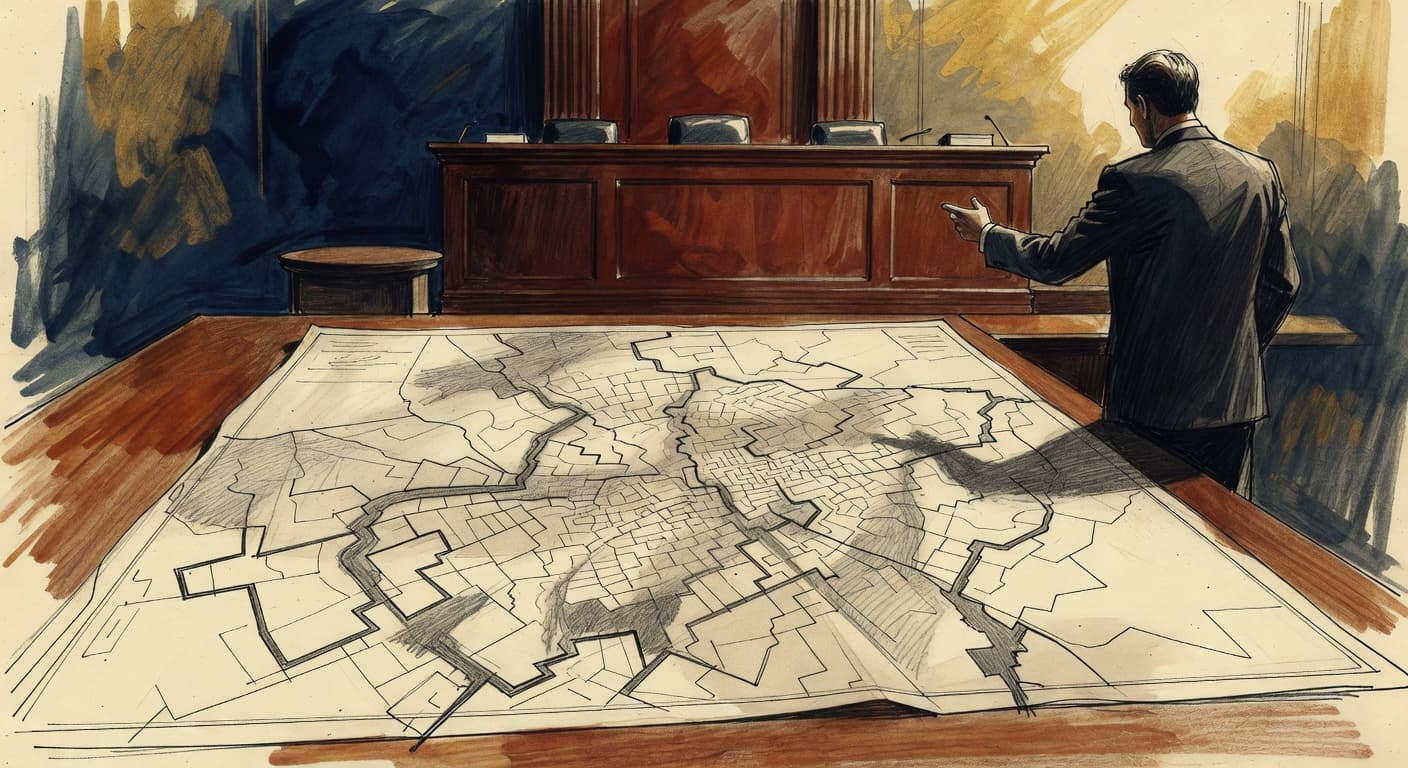
The case addressed the difficult question of when political influence over district lines has gone too far.
Question presented
Whether federal courts have the authority to decide claims of partisan gerrymandering.
What the Court decided
The vote
From the opinions
““Partisan gerrymandering claims present political questions beyond the reach of the federal courts.””
What's next
The Maryland lower court rulings were vacated and the case was remanded. Maryland election officials prevail, while federal courts must dismiss partisan-gerrymandering claims as political questions.
Documents
Docket activity
New analysis added
AI analysis generated: Case Briefing
New analysis added
AI analysis generated: Impact Analysis
AI analysis generated: Opinion Summary
Show 7 moreShow fewer
Case data updated: summary, question_presented, generation_metadata
New analysis added
New analysis added
Opinion added: opinion
Audio Recording added: Oral Arguments - Lamone
Brief added: Jurisdictional Statement
Brief added: Questions Presented
More questions
- What did the Supreme Court rule in Lamone v. Benisek?
- The Court said federal courts cannot decide claims that electoral maps are unconstitutional partisan gerrymanders. It vacated rulings that had favored Maryland voters.
- Who won Lamone v. Benisek?
- Maryland election officials won. The Court removed the lower court rulings against them.
- What happens next after Lamone v. Benisek?
- The case returns to the lower court after the Supreme Court's order. Federal courts must treat partisan-gerrymandering claims as political questions they cannot decide.
Sources
Primary materials plus reporting. Best-effort analysis: this explainer relies on a mix of primary materials and trusted secondary sources. Official filings and opinions remain authoritative.