Harris v. Arizona Independent Redistricting Commission
In brief
The Supreme Court unanimously agreed with the lower court and left Arizona's redistricting plan in place.
- Where it stands
- Decided
Decided 8-0 · April 20, 2016 · Opinion by Justice Breyer
- What it’s about
- Voters sued the Arizona Independent Redistricting Commission, arguing that newly drawn voting districts violated the one person, one vote principle by over-populating Republican-leaning districts and under-populating Democratic-leaning ones.
- Who it affects
- Arizona's challenged redistricting plan remains in place for voters assigned to its districts.
Summary: written with AI from the case record.
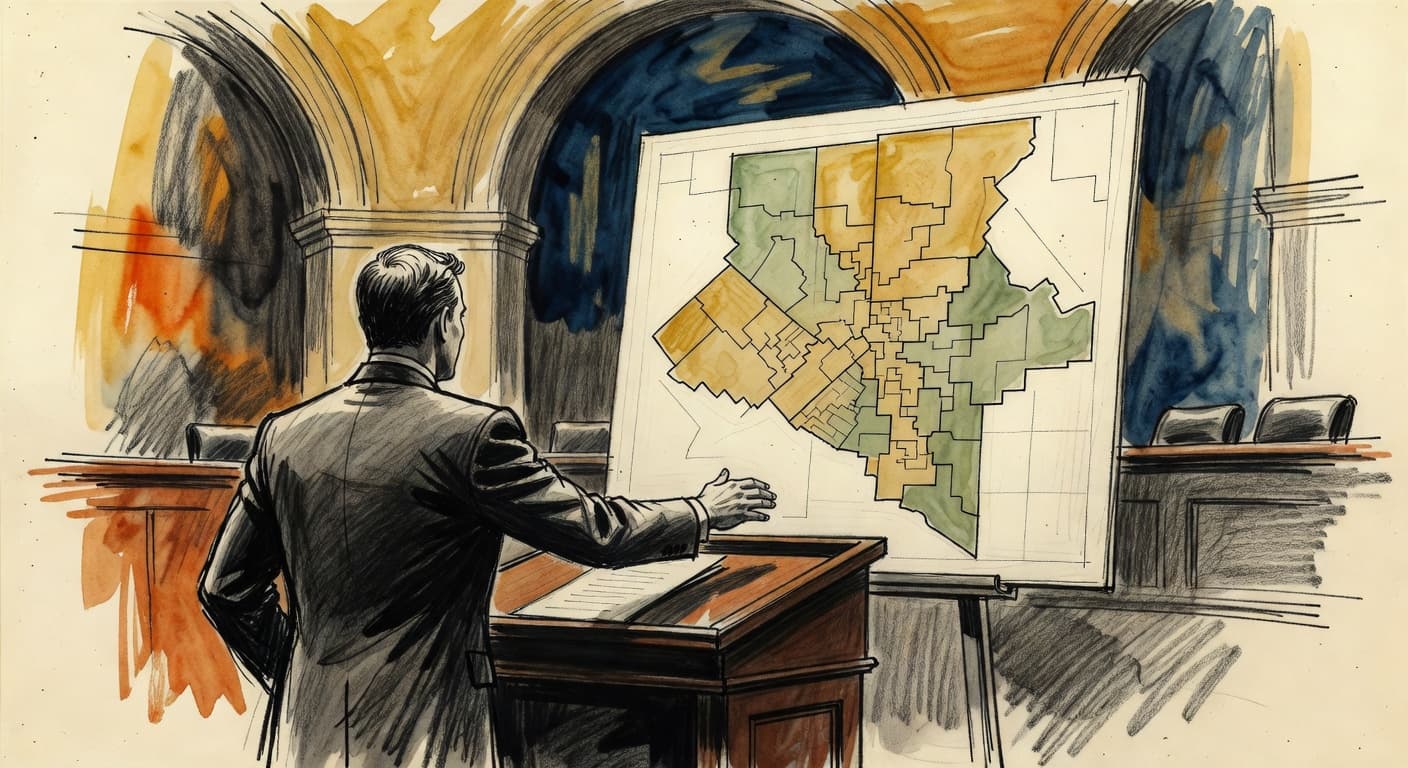
What it's about
The Supreme Court ruled that minor population deviations are constitutional if they result from legitimate considerations, such as a good faith effort to comply with the Voting Rights Act.
The dispute concerned the one-person, one-vote rule, which asks whether districts have roughly equal populations.
Question presented
1. Does the desire to gain advantage for one political party justify intentionally over-populating voting districts so that individual votes are devalued, thereby violating the one-person, one-vote principle? 2. Does the desire to obtain favorable preclearance review from the Justice Department permit the creation of voting districts that deviate from the one-person, one-vote principle in the wake of the Supreme Court’s decision in Shelby County v. Holder?
What the Court decided
Holding
The District Court did not err in upholding Arizona’s redistricting plan. 993 F. Supp. 2d 1042, affirmed.
- Result
- Affirmed
The vote
What's next
The lower court's decision remains in force; the Supreme Court did not send the case back for further proceedings.
Documents
Docket activity
New analysis added
AI analysis generated: Case Briefing
New analysis added
AI analysis generated: Impact Analysis
AI analysis generated: Opinion Summary
Show 6 moreShow fewer
AI analysis generated: Decision Record
Case data updated: title, opinion_date
New analysis added
Case data updated: term, status, opinion_date
Opinion added: Harris
Brief added: Questions Presented
Sources
Primary materials plus reporting. Best-effort analysis: this explainer relies on a mix of primary materials and trusted secondary sources. Official filings and opinions remain authoritative.