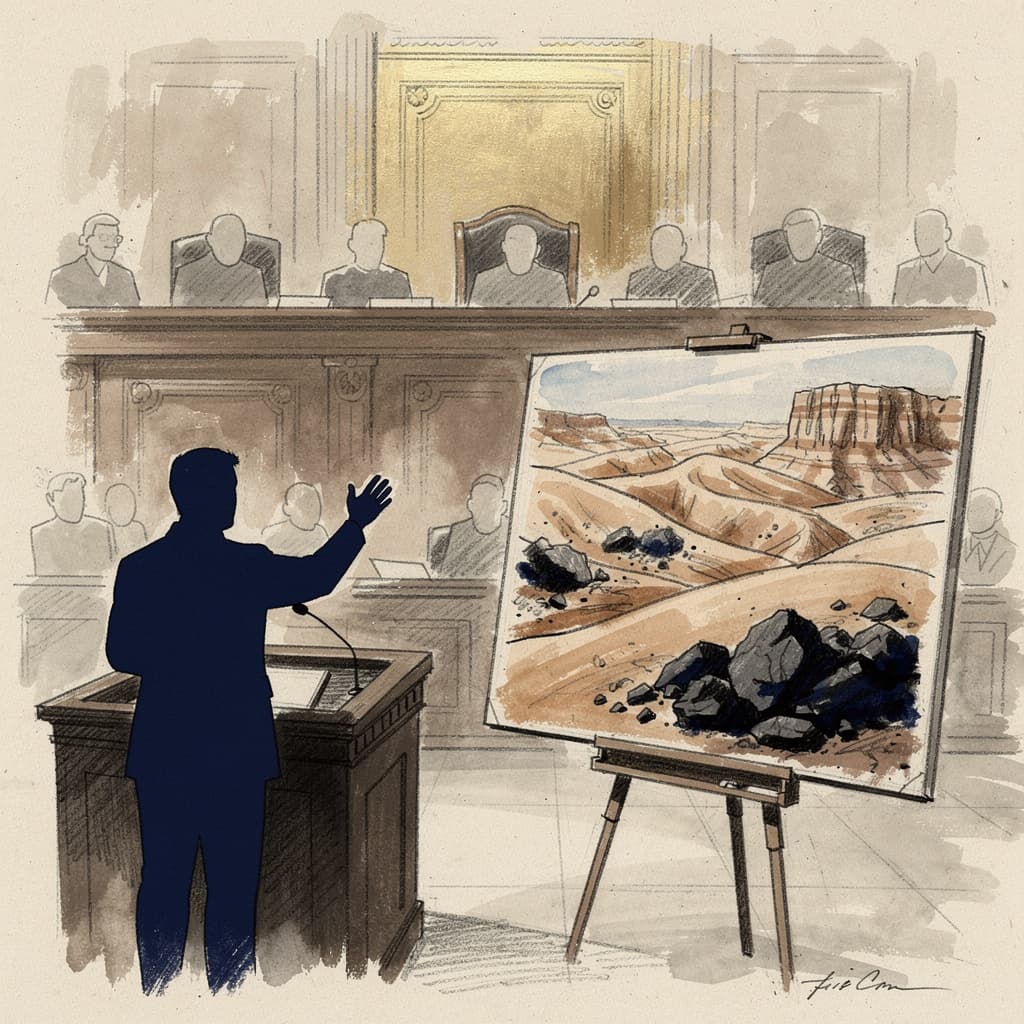
United States v. Navajo Nation
Can the U.S. be held liable for a breach of trust with an Indian Tribe in connection with the negotiation of a mining lease, even when the U.S. has violated no specific statutory or regulatory duty established in the Indian Mineral Leasing Act of 1938?
- Status
- Decided
- Appeal from
- United States Court of Appeals for the Federal Circuit
- Argued
- Dec 2, 2002
- Decision released
- Mar 4, 2003
Briefing
What Happened
The Supreme Court is reviewing whether the U.S. government can be held responsible for a breach of trust regarding Indian coal lease amendments. The case asks if the government is liable for misusing its power during mining lease negotiations even if it did not violate a specific law or regulation.
Why It Matters
This case could change how the federal government manages tribal resources and its financial responsibility to Native American tribes. If the Court finds the government liable, it could lead to significant compensation for tribes whose resources were undervalued during negotiations.
The Big Picture
The dispute centers on the fiduciary duty (a legal obligation to act in another party's best interest) the U.S. owes to Indian Tribes. It follows a 2003 decision that previously limited when tribes could sue the government for mismanagement of mineral leases.
What the Justices Said
The Court previously ruled 6-3 in a related 2003 decision, but the current case is pending and no new justice reactions are available yet.
The Bottom Line
The Court must decide if the government's general trust relationship with tribes allows for lawsuits when specific mining laws were not broken.
What's Next
The next major milestone is for the Court to schedule oral arguments where lawyers for both the Navajo Nation and the U.S. government will present their cases. After arguments, the justices will meet privately to vote and eventually issue a written opinion.
What is the core dispute in this case?
The Navajo Nation claims the U.S. government failed its duty to protect tribal interests during coal lease negotiations. The government argues it cannot be sued because it did not violate any specific regulations.
What are the real-world consequences for the Navajo Nation?
A ruling in favor of the tribe could result in millions of dollars in damages for lost royalty revenue. It would also give tribes more leverage when the government manages their natural resources.
What legal rule is the Court examining?
The Court is looking at whether a breach of trust can exist without a violation of the Indian Mineral Leasing Act. This involves defining the limits of the government's fiduciary (trust-based) responsibilities.
What is the next procedural step for this case?
The case is currently pending on the Court's docket. The justices will eventually hear oral arguments before releasing a final decision later in the term.
How does this fit into a broader legal trend?
This case is part of a long history of legal battles over tribal sovereignty and federal oversight. It tests how strictly the Court will interpret the government's historical promises to Native American nations.
Timeline
Sources
Docket plus reporting.
Refreshed Mar 31, 2026.
Context reporting
Coverage
Related cases