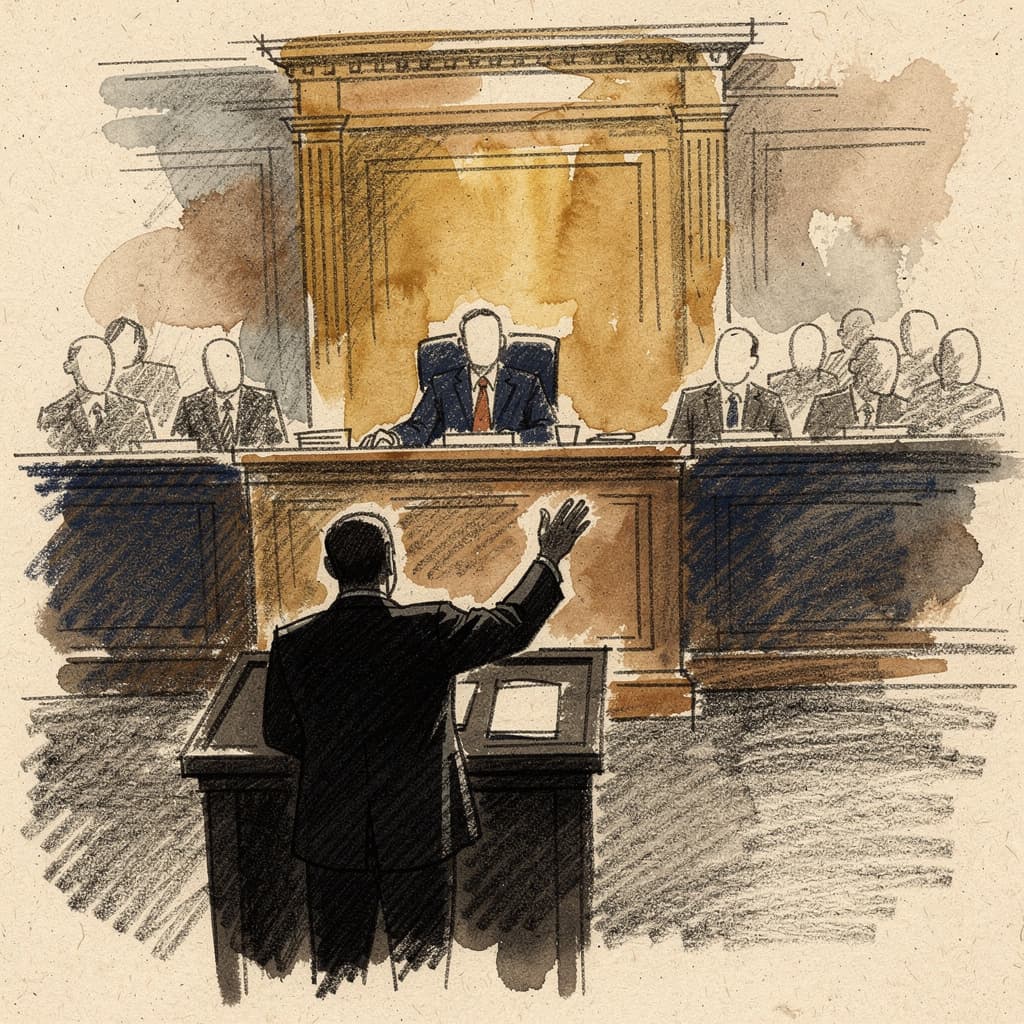
Kelly v. South Carolina
The Supreme Court reviewed a death penalty case where a defendant was denied a jury instruction stating that a life sentence would carry no possibility of parole. The Court determined that because the prosecution argued the defendant posed a future danger, due process required informing the jury that he would be ineligible for parole if spared the death penalty.
- Status
- Decided
- Appeal from
- South Carolina Supreme Court
- Argued
- Nov 26, 2001
- Decision released
- Jan 9, 2002
Decision briefing
The case in plain English
What happened
The Supreme Court ruled that William Kelly's due process (fair treatment) rights were violated during his death penalty trial. The Court held that because the prosecution argued Kelly was a future danger, the jury should have been told that a life sentence meant he would never be eligible for parole.
Why it matters
This decision ensures that jurors in death penalty cases have all the facts about sentencing options. It prevents jurors from choosing the death penalty simply because they fear a defendant might eventually be released from prison.
The big picture
The case builds on legal precedents regarding transparency in capital (death penalty) sentencing. It highlights the ongoing debate over how much information a jury needs to make a fair decision between life and death.
What the justices said
The Court ruled 5-4, with Justice Souter writing for the majority. Justices Stevens, O'Connor, Ginsburg, and Breyer joined the majority, while Justices Rehnquist, Scalia, Kennedy, and Thomas dissented.
“Kelly was entitled to a jury instruction that he would be ineligible for parole under a life sentence.”
The bottom line
If a prosecutor argues a defendant is dangerous, the jury must be told if a life sentence excludes the possibility of parole.
What's next
Watch for how lower courts, agencies, or affected parties respond to the ruling. This decision may lead to new sentencing hearings for other death row inmates in similar situations.
What was the main legal disagreement in this case?
The case centered on whether a trial court must tell a jury that a life sentence means no parole. The Court decided if withholding this violated the right to a fair trial.
How does this ruling affect future death penalty trials?
Jurors will be fully informed when a prosecutor claims a defendant is a future threat. This ensures the death penalty is not chosen based on a misunderstanding of life sentences.
What specific legal requirement did the Court establish?
The Court ruled that due process requires a parole ineligibility instruction when future dangerousness is an issue. This rule applies even if the state's sentencing laws are complex.
What happens to William Kelly's case now that the Supreme Court has ruled?
The case will likely return to the lower courts to address the sentencing error. Kelly may receive a new sentencing hearing where the jury is properly instructed about parole.
How does this case fit into the history of Supreme Court rulings on the death penalty?
This case follows a trend of requiring more transparency in capital (death penalty) cases. It reinforces the idea that juries must have clear information before making life-or-death decisions.
Where things stand
Timeline
Source note
How this page is sourced
Official case materials anchor this page. Reporting is used only to add context and explain the dispute in plain English.
Page data last refreshed Mar 31, 2026.
Recent coverage
In the news
More to watch