Florida v. Thomas
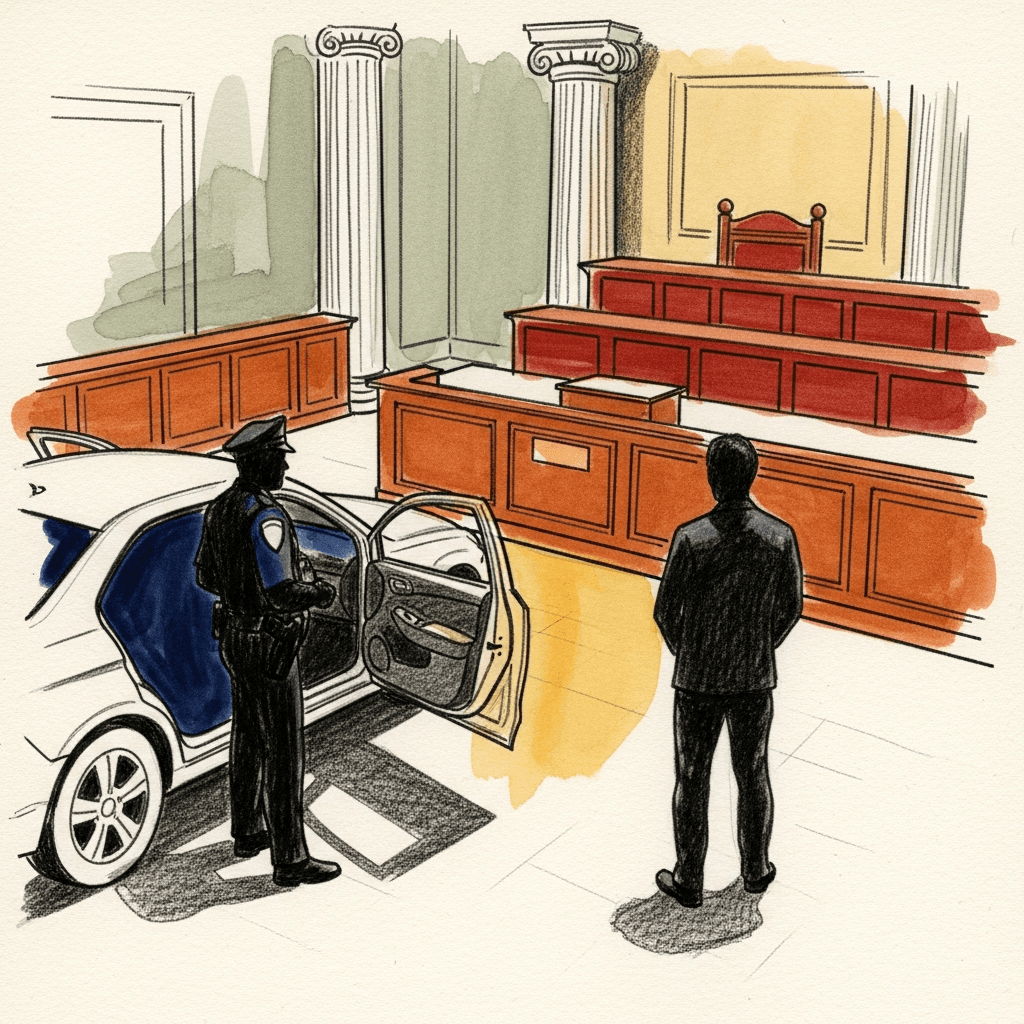
The Supreme Court considered whether a police search of a vehicle incident to arrest is valid when the officer first contacts the suspect after they have already exited the vehicle, but ultimately dismissed the case on jurisdictional grounds because the state court's judgment was not final.
- Status
- Decided
- Appeal from
- Florida Supreme Court
- Argued
- Apr 25, 2001
- Decision released
- Jun 4, 2001
Decision briefing
The case in plain English
What Happened
The Supreme Court dismissed the case without deciding the main legal issue. The justices found they did not have the authority to rule because the Florida Supreme Court's decision was not yet final. This meant the case had to be sent back to the lower courts to finish the legal process.
Why It Matters
This decision left a major question about police power unanswered for several years. It meant that drivers and police officers remained uncertain if a car could be searched without a warrant if the driver had already stepped out of the vehicle. For example, a person who exits their car before an officer arrives might have different privacy protections depending on the state.
The Big Picture
The case involves the Fourth Amendment, which protects citizens from unreasonable searches by the government. It specifically looks at the 'search incident to arrest' (a search allowed during an arrest) rule. The Court often tries to create 'bright-line' (clear and simple) rules for police to follow during traffic stops.
What the Justices Said
The Court voted 9-0 to dismiss the case for lack of jurisdiction (legal authority). Chief Justice Rehnquist wrote the unanimous opinion, which focused on the procedural requirement that state court decisions must be final before the Supreme Court can review them.
The Bottom Line
The Supreme Court refused to rule on the vehicle search issue because the case was not procedurally ready for their review.
What's Next
The case returned to the Florida court system for further legal proceedings. Law enforcement and legal experts had to wait for a future Supreme Court case to clarify when police can search a vehicle after an occupant has exited.
What was the core dispute the Court was asked to resolve?
The Court was asked if police can search a car without a warrant when they first contact a suspect who has already exited the vehicle. This involves deciding if existing search rules apply to people who are no longer inside their cars.
What are the real-world consequences of the Court dismissing this case?
Because the Court did not provide a final answer, police and citizens faced a period of legal uncertainty. This meant that privacy rights during a roadside arrest could vary significantly from one state to another.
What legal rule prevented the Court from deciding the vehicle search issue?
The Court followed a rule that it can only review state court decisions that are 'final.' Since the Florida court's judgment was not final, the justices lacked the jurisdiction (legal power) to hear it.
What was the next procedural step for this specific case?
The case was sent back to the Florida Supreme Court to continue the legal process. The state court had to reach a final conclusion before the U.S. Supreme Court could consider the issue again.
How does this case reflect a broader trend in Supreme Court history?
This case shows the Court's strict adherence to procedural rules regarding which cases it can hear. It highlights the difficulty of creating clear rules for the Fourth Amendment while following strict jurisdictional (legal authority) limits.
Where things stand
Timeline
Source note
How this page is sourced
Official case materials anchor this page. Reporting is used only to add context and explain the dispute in plain English.
Page data last refreshed Mar 31, 2026.
Recent coverage
In the news
More to watch