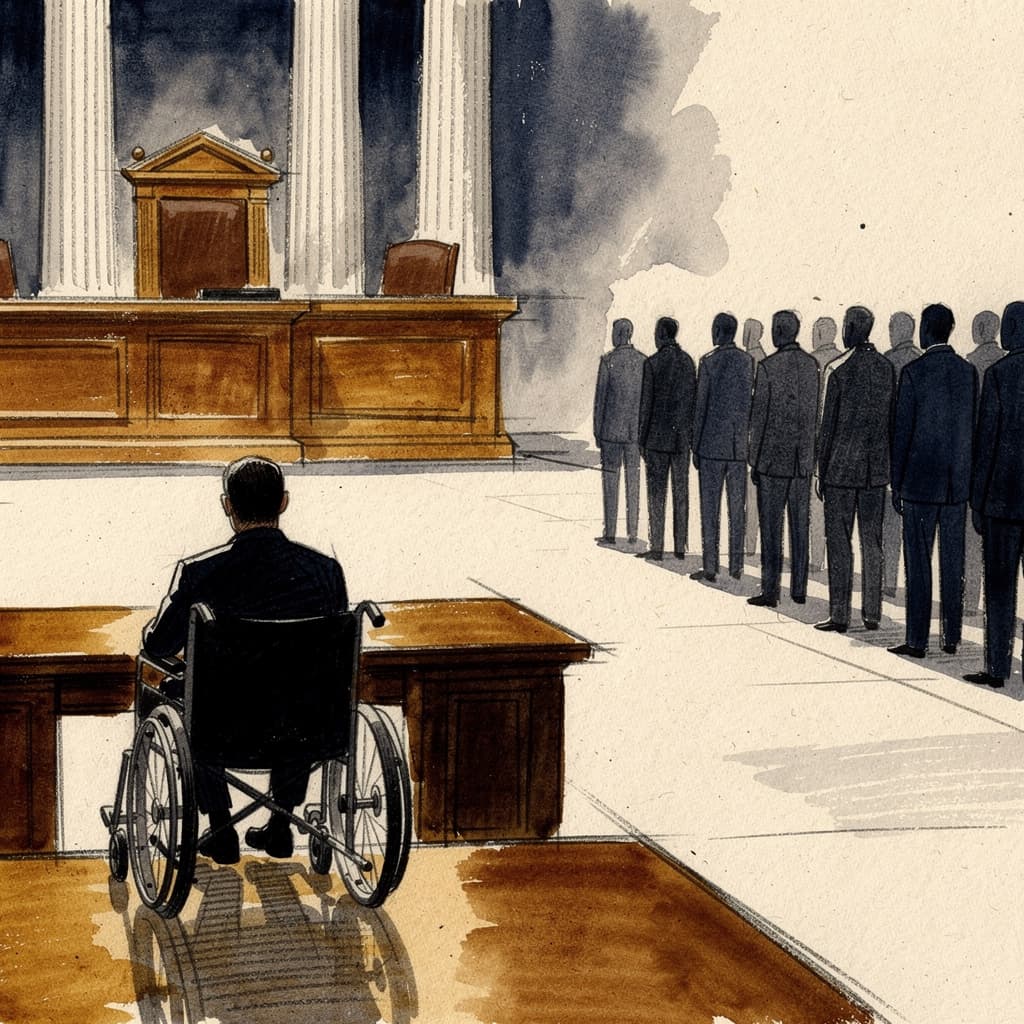
US Airways, Inc. v. Barnett
```json {
- Status
- Decided
- Appeal from
- United States Court of Appeals for the Ninth Circuit
- Argued
- Dec 4, 2001
- Decision released
- Apr 29, 2002
Decision briefing
The case in plain English
What Happened
The Supreme Court ruled that employers generally do not have to ignore their seniority systems (rules giving preference to long-term workers) to reassign a disabled employee. However, the Court noted that an employee can still win if they show special circumstances that make an exception reasonable in their specific case.
Why It Matters
This decision protects the job expectations of long-term employees who rely on seniority for better positions. It also clarifies that while the ADA is powerful, it does not automatically override every existing company policy.
The Big Picture
The case deals with the tension between protecting individual rights under the ADA and maintaining fair rules for all workers. It sets a standard for how businesses must handle requests for 'reasonable accommodations' when they conflict with other workplace rights.
What the Justices Said
The Court ruled 7-2, with Justice Breyer writing the majority opinion. Justices Souter and Ginsburg dissented from the decision.
“the ADA did not require the employer to assign the employee to the mailroom position in violation of [the seniority system]”
The Bottom Line
Seniority systems usually win over ADA reassignment requests unless the employee can prove special circumstances.
What's Next
Watch for how lower courts, agencies, or affected parties respond to the ruling. Future lawsuits will likely focus on defining what 'special circumstances' allow a disabled worker to bypass a seniority system.
What was the primary conflict in this case?
Barnett wanted a mailroom job to accommodate his back injury, but US Airways said it violated their seniority rules.
How does this ruling affect workers with disabilities?
It makes it harder for them to get reassigned to new roles if a company has a strict seniority policy.
What standard did the Court create for these situations?
Seniority systems are usually considered a valid reason to deny a transfer. Employees must prove special circumstances to get an exception.
What happens now that the Supreme Court has issued its decision?
Lower courts will use this new standard to decide similar lawsuits between employees and their companies.
How does this case fit into the history of disability law?
This ruling shows the Court's effort to balance the goals of the ADA with the existing rights of other workers.
Where things stand
Timeline
Source note
How this page is sourced
Official case materials anchor this page. Reporting is used only to add context and explain the dispute in plain English.
Page data last refreshed Mar 31, 2026.
Recent coverage
In the news
More to watch