Drug dog searches
Tecquin Darkeem Moore v. Virginia
In brief
- Where it stands
- Dismissed
Petition denied.
- What it’s about
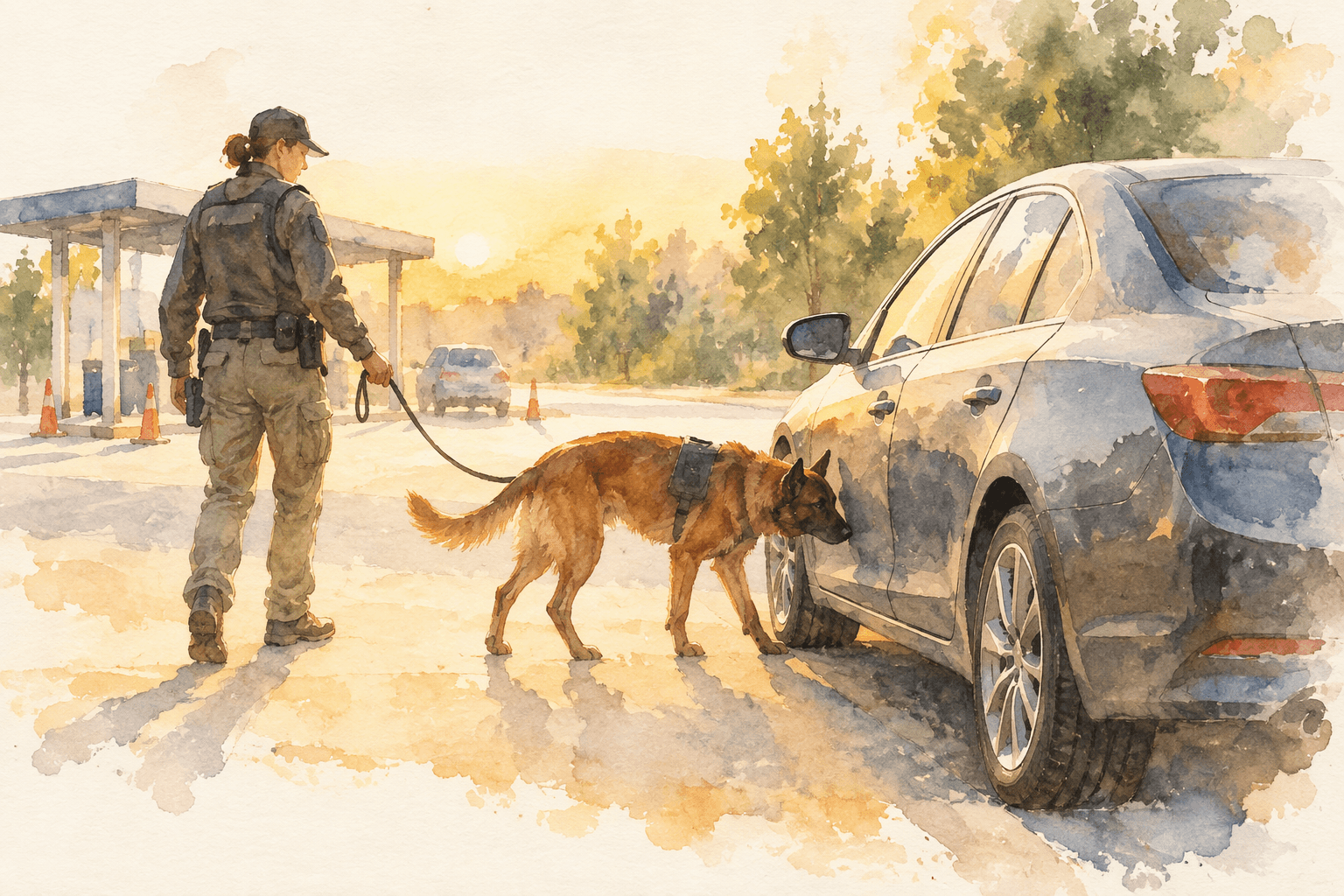
- Tecquin Darkeem Moore challenged evidence admitted after a Virginia court rejected his request to suppress it, arguing that a drug dog’s behavior without an alert did not justify the vehicle search.
- Who it affects
- Moore's Supreme Court case is over, but the Court did not decide whether the search violated the Fourth or Fourteenth Amendment.
Summary: written with AI from the case record.
What it's about
The Supreme Court refused to hear his case (denied review) and did not decide whether the search violated the Constitution.
Moore's claim focused on whether a drug dog's behavior short of an alert could support the vehicle search that led to evidence admitted in his case.
Question presented
Where a properly trained drug dog, who was handled by a properly qualified trainer, failed to alert to drugs in a dog sniff of a vehicle, but merely engaged in “casting” about and allegedly exhibited untrained behavioral responses short of what the trainer deems to be an alert, did the overruling of a Motion to Suppress and the admission of evidence stemming therefrom violate the Fourth and Fourteenth amendments to the Constitution of the United States as fruit of the poisonous tree due to an unreasonable search and seizure?
Documents
Docket activity
New analysis added
AI analysis generated: Case Briefing
AI analysis generated: Decision Record
Case data updated: summary, question_presented, generation_metadata
Case data updated: question_presented, extraction_metadata
Show 1 moreShow fewer
Brief added: Petition
Sources
Primary materials plus reporting. Best-effort analysis: this explainer relies on a mix of primary materials and trusted secondary sources. Official filings and opinions remain authoritative.