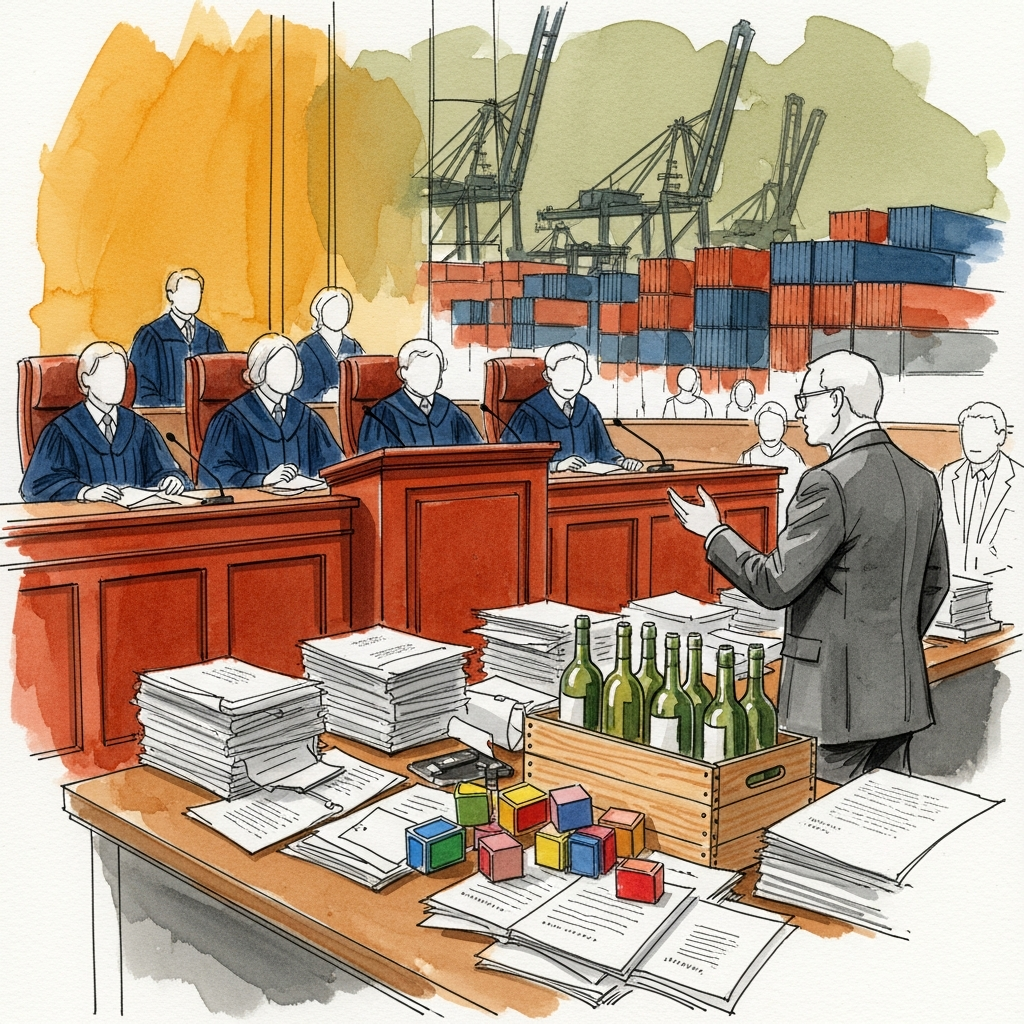
Illustration for Quentin Veneno, Jr., Petitioner v. United States
Docket 24-5191

Quentin Veneno, Jr., Petitioner v. United States

This case involves a challenge to the Major Crimes Act and the federal government's plenary power over Native American affairs, specifically asking the Court to reconsider precedent regarding federal jurisdiction. The petitioner seeks to overturn the Tenth Circuit's ruling by arguing that the plenary power theory underlying the Major Crimes Act is unconstitutional.

Status
Decided
Appeal from
United States Court of Appeals for the Tenth Circuit
Decision released
Nov 10, 2025

Decision briefing

The case in plain English

Start with the holding, why it matters, and the strongest takeaways from the opinions.

How did the Court rule on federal jurisdiction in tribal cases?

The Supreme Court issued a ruling on the Major Crimes Act, a law that gives the federal government power to prosecute certain crimes on Native American land. The Court addressed whether the 'plenary power' (absolute authority) theory used to support this law is unconstitutional. The decision follows a challenge to a lower court ruling that had upheld federal jurisdiction in these matters.

Who is affected by this change in federal power?

This case impacts how crimes are prosecuted on tribal lands and who has the authority to oversee them. If the federal government's power is limited, it could change the legal relationship between the United States and tribal nations. Tribal members and local law enforcement will have to navigate new rules regarding which court has the right to hear a case.

How much power does the federal government have over tribal lands?

For decades, the federal government has claimed broad authority over Native American affairs based on the Major Crimes Act. This case is part of a larger legal debate about whether that authority matches the original meaning of the Constitution. Many legal experts have argued that the 'day of reckoning' for this theory was inevitable as tribes seek more sovereignty (independence).

What was the Court's reasoning for this decision?

The Court issued a decision on November 10, 2025, regarding the constitutionality of the Major Crimes Act. Specific justice-by-justice vote counts were not provided in the case summary.

The day of reckoning for the plenary power theory comes sooner or later, it must come.

— Justice The Court(majority)

What does this mean for the Major Crimes Act?

The Supreme Court has ruled on the Major Crimes Act, potentially shifting the balance of power between the federal government and tribal nations.

How will lower courts handle tribal jurisdiction now?

Lower courts and government agencies must now adjust their practices to follow the Supreme Court's new guidance. Affected parties, including tribal governments and federal prosecutors, will be watching closely to see how this affects ongoing criminal cases. Future lawsuits may arise as both sides test the limits of the Court's ruling.

What was the core dispute in Veneno v. United States?

The case centered on whether the federal government has the constitutional right to exercise absolute power over tribal affairs through the Major Crimes Act. The petitioner argued that this long-standing theory of federal jurisdiction is unconstitutional and should be overturned.

What are the real-world consequences for people living on tribal lands?

The ruling could change which government—federal or tribal—is responsible for investigating and prosecuting major crimes. This shift may affect the speed of trials and the specific laws that apply to residents in these areas.

What legal rule did the Court address in its decision?

The Court examined the 'plenary power' theory, which suggests the federal government has total authority over Native American tribes. The ruling focused on whether this theory is supported by the Constitution or if it should be reconsidered.

What is the next procedural step following the ruling?

The case will likely return to lower courts to apply the Supreme Court's findings to specific legal disputes. Agencies and tribal leaders will also begin updating their policies to comply with the new legal standard.

How does this case fit into broader legal trends?

This decision reflects a growing trend of the Court re-examining old precedents (past rulings) that define federal and tribal relations. It marks a significant moment where the Court chose to address the historical 'plenary power' doctrine directly.

Where things stand

Timeline

Key court milestones at a glance.

Case Accepted
Arguments HeardUpcoming
Decision ReleasedNov 10, 2025

Source note

How this page is sourced

Official case materials anchor this page. Reporting is used only to add context and explain the dispute in plain English.

Page data last refreshed Mar 9, 2026.

Primary materials

Documents & resources

Briefs, opinions, transcripts, and audio when they are available.

Opinions

Veneno
opinionBy Neil Gorsuch

Briefs

Other
brief
Other
brief
Other
brief
Other
brief
Other
brief
Other
brief
Other
brief
Other
brief
Other
brief
Other
brief
Other
brief
Other
brief
Other
brief
Other
brief
Other
brief
Other
brief
Other
brief
Other
brief
Other
brief
Other
brief
Other
brief
Other
brief
Other
brief
Other
brief

Recent coverage

In the news

Selected reporting and analysis that can help you follow the public conversation around the case.

More to watch

Related cases on the docket

Other live cases with a similar posture, so readers can move across the docket without losing the thread.