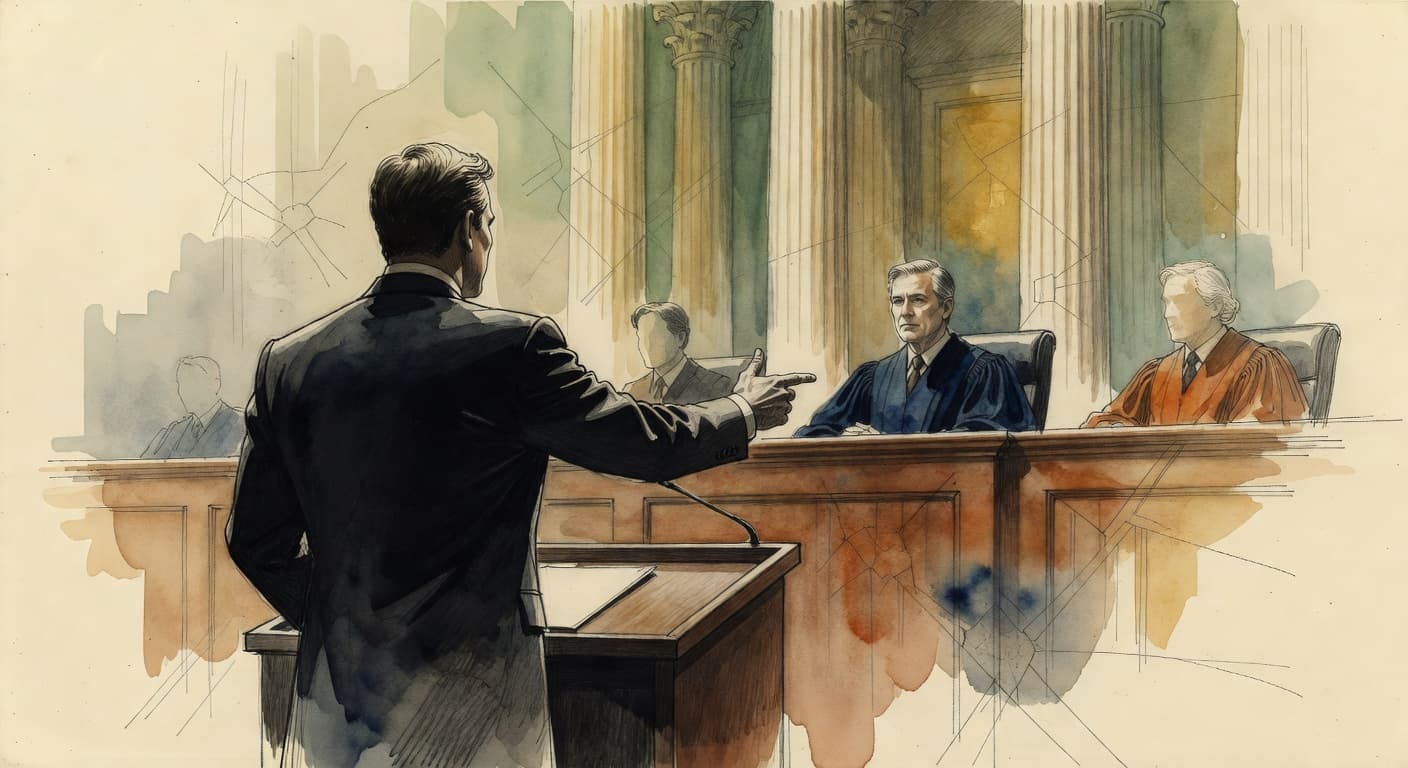
Facebook, Inc., et al., Petitioners v. Amalgamated Bank, et al.
This case involves a securities fraud lawsuit against Facebook alleging that the company misled investors by framing the misuse of user data as a hypothetical risk rather than disclosing that the Cambridge Analytica data breach had already occurred. The Supreme Court initially agreed to hear the case but ultimately dismissed it without issuing a ruling on the merits.
- Status
- Decided
- Appeal from
- United States Court of Appeals for the Ninth Circuit
- Argued
- Nov 6, 2024
- Decision released
- Nov 22, 2024
Decision briefing
The case in plain English
Why did the Supreme Court drop the Facebook data privacy case?
The Supreme Court dismissed the case after initially agreeing to decide if companies must disclose past data breaches that no longer pose a future threat. By dismissing the writ of certiorari (the order to hear the case) as 'improvidently granted,' the Court chose not to issue a final ruling on the legal merits of the dispute.
How will this affect future lawsuits over corporate risk disclosures?
This decision means the lower court's ruling against Facebook stands for now, allowing the investor lawsuit to proceed. It leaves open the question of whether other companies can be sued for framing past scandals as hypothetical risks in their financial reports.
How much must companies tell investors about past data problems?
The case stems from the 2018 Cambridge Analytica scandal, where a consulting firm improperly accessed data from millions of Facebook users. Investors sued, arguing that Facebook's failure to specifically mention this past event in its risk disclosures was a form of securities fraud.
How did the Court explain its decision to stop the case?
The Court issued a brief order dismissing the case without providing a detailed vote count or a full explanation of the justices' individual views.
“The Court dismissed the writ of certiorari as improvidently granted.”
What does the dismissal of the Facebook case mean for securities law?
The Supreme Court declined to set a national standard on past risk disclosures, leaving the current legal landscape unchanged.
What happens to the lawsuit against Facebook now?
The litigation will return to the lower courts where Facebook and the investors will continue their legal battle. Observers will watch to see if the Court takes up a similar case in the future to clarify these disclosure rules.
What was the core dispute between Facebook and Amalgamated Bank?
The bank argued Facebook misled investors by calling data misuse a 'risk' when it had already happened. Facebook claimed it did not need to disclose past events that posed no future harm.
What are the real-world consequences for tech companies after this dismissal?
Companies may face more pressure to be specific about past security failures in their investor reports. This could lead to more lawsuits if they use vague language about potential risks.
What legal rule was the Court asked to clarify in this case?
The Court was asked if risk disclosures are misleading if they omit past events that do not present a known risk of ongoing business harm. This remains an open legal question.
What is the next procedural step for this specific lawsuit?
The case returns to the lower courts for further proceedings. The parties will likely move toward a trial or a settlement now that the Supreme Court has stepped away.
Does this case reflect a broader trend in how the Court handles corporate transparency?
The dismissal suggests the Court may be hesitant to create broad new rules for corporate disclosures. It shows the justices sometimes decide a case is not the right vehicle for a ruling.
Where things stand
Timeline
Source note
How this page is sourced
Official case materials anchor this page. Reporting is used only to add context and explain the dispute in plain English.
Page data last refreshed Mar 9, 2026.
Primary materials
Documents & resources
Briefs
Opinions
Audio
Recent coverage
In the news
More to watch