United States v. Skrmetti
In brief
Tennessee may continue enforcing its restriction on specified gender-transition treatments for minors.
- Where it stands
- Decided
Decided 6-3 · June 18, 2025 · Opinion by Chief Justice Roberts
- What it’s about
- The Supreme Court reviewed a Tennessee law that prohibits healthcare providers from administering certain medical treatments, such as puberty blockers and hormones, to minors for the purpose of gender transition.
- Who it affects
- Tennessee healthcare providers remain barred from providing the covered treatments to transgender minors for gender transition. The decision allows Tennessee to regulate these medical procedures for minors under its law.
Summary: written with AI from the case record.
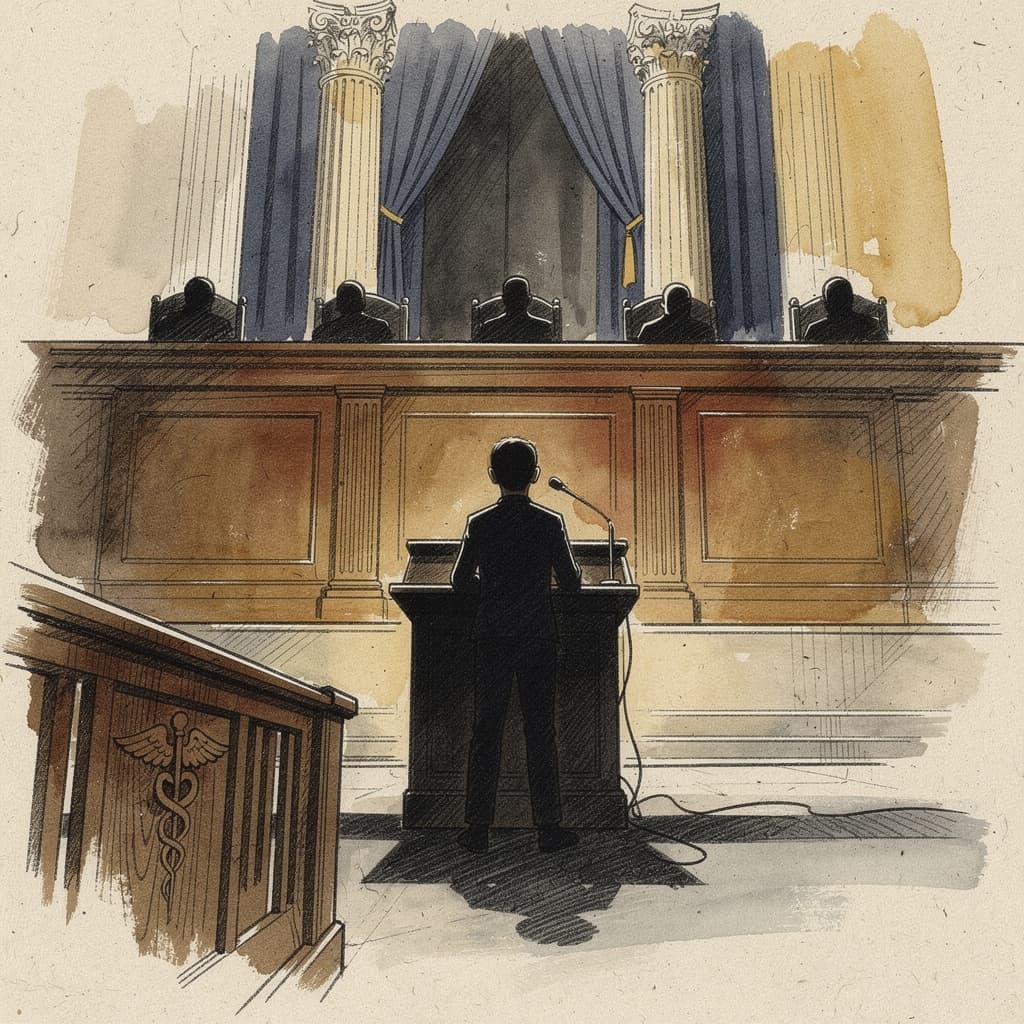
What it's about
The Court determined that the ban does not discriminate based on sex and satisfies rational basis review, thereby upholding the state's authority to regulate these medical procedures for minors.
The case addresses whether the Equal Protection Clause of the Fourteenth Amendment requires closer judicial review of Tennessee's restrictions on these treatments.
Question presented
Does a Tennessee law restricting certain medical treatments for transgender minors violate the Equal Protection Clause of the 14th Amendment?
What the Court decided
Holding
Tennessee’s law prohibiting certain medical treatments for transgender minors is not subject to heightened scrutiny under the Equal Protection Clause of the Fourteenth Amendment and satisfies rational basis review. 83 F. 4th 460, affirmed.
- Result
- Affirmed
The vote
- Joined the judgment
- Concurred in a separate opinion
- Dissented
- Wrote an opinion
- Concurring · 3agreed with the result, wrote separately
From the opinions
“Tennessee’s law prohibiting certain medical treatments for transgender minors is not subject to heightened scrutiny under the Equal Protection Clause of the Fourteenth Amendment and satisfies rational basis review.”
What's next
Tennessee's law remains in effect, and healthcare providers must follow its restrictions. Lower courts must apply the Supreme Court's decision when considering this Equal Protection challenge.
Documents
Docket activity
New analysis added
AI analysis generated: Impact Analysis
AI analysis generated: Opinion Summary
New analysis added
AI analysis generated: Case Briefing
Show 7 moreShow fewer
AI analysis generated: Decision Record
Status changed from unknown to unknown
Status changed from unknown to unknown
Opinion added: opinion
Opinion added: Skrmetti
Audio Recording added: Oral Arguments - Skrmetti
Status changed from unknown to unknown
More questions
- What did the Supreme Court rule in Skrmetti?
- The Court upheld Tennessee's restriction on certain gender-transition treatments for minors. It concluded that the law satisfies rational basis review (a deferential constitutional test).
- Who won United States v. Skrmetti?
- Tennessee won. The Court affirmed the Sixth Circuit's decision upholding the state law.
- What does Skrmetti mean for transgender minors in Tennessee?
- The covered puberty blockers and hormone treatments cannot be provided to minors for gender transition under Tennessee law. Healthcare providers must comply with the ban.
- What happens next after Skrmetti?
- Tennessee may enforce its law. Lower courts must follow the Court's conclusion that this Equal Protection challenge receives rational basis review.
Sources
Primary materials plus reporting. Best-effort analysis: this explainer relies on a mix of primary materials and trusted secondary sources. Official filings and opinions remain authoritative.