Baker v. City of McKinney
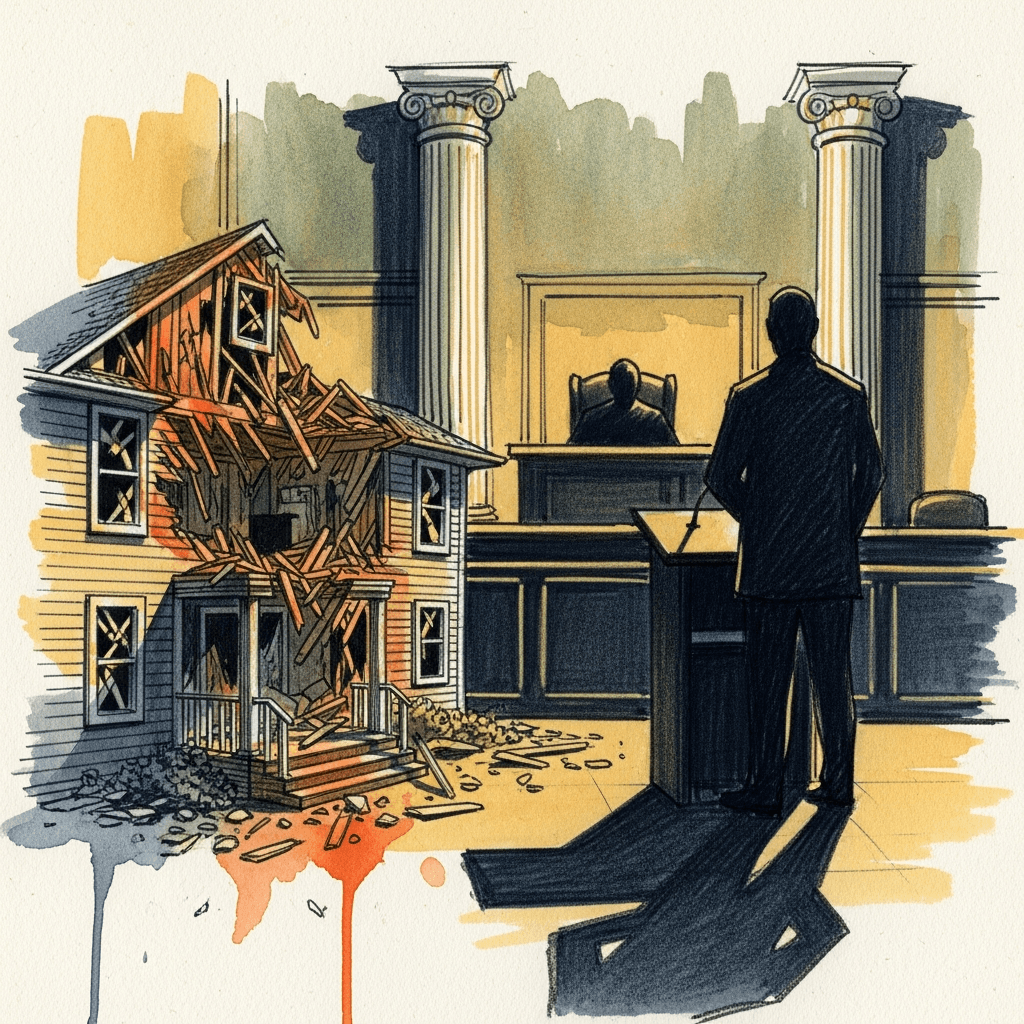
This case involves a homeowner seeking compensation under the Fifth Amendment's Takings Clause after police destroyed her home during a raid to apprehend a fugitive. The central dispute is whether the government must pay for property damage caused while exercising its police powers.
- Status
- Dismissed
- Appeal from
- United States Court of Appeals for the Fifth Circuit
Case briefing
Case snapshot
What Happened
The Supreme Court ruled that the government must pay for property damage even when it is using its police powers. The Court found that the City's destruction of a woman's home during a police raid was a compensable taking under the Fifth Amendment. This means the government cannot avoid paying for private property it destroys just because it was performing law enforcement duties.
Why It Matters
This decision protects homeowners from losing everything when police operations cause massive damage to their houses. For example, if a SWAT team destroys a house to catch a suspect, the city can no longer claim it owes the owner nothing. It shifts the financial burden of public safety from individual victims to the government.
The Big Picture
The Fifth Amendment's Takings Clause usually requires the government to pay 'just compensation' when it takes private land for public use. Historically, some courts argued this didn't apply to police actions, but this ruling clarifies that the Constitution protects property rights even during emergencies. It reinforces the idea that the public should share the costs of law enforcement actions.
What the Justices Said
The Court issued its decision on November 25, 2024, though specific vote counts and individual justice alignments were not provided in the case records.
“The City’s destruction of Baker’s property was a compensable taking under the Takings Clause of the Fifth Amendment.”
The Bottom Line
The government must pay homeowners for property destroyed during police raids under the Fifth Amendment.
What's Next
Lower courts will now use this ruling to decide similar cases where police damaged private property. Local governments and police departments may need to change their budgets or insurance to cover these potential costs. Affected parties should watch how cities update their policies for compensating residents after law enforcement actions.
What was the core dispute in this case?
The case centered on whether the government is exempt from paying for property damage if the damage happens while police are exercising their 'police powers.' The homeowner argued the Fifth Amendment requires payment regardless of the reason for the destruction.
What are the real-world consequences for property owners?
Property owners can now seek money from the government if their homes are ruined during law enforcement activities. This provides a safety net for innocent people whose property is caught in the crossfire of police raids.
What legal rule did the Court establish?
The Court established that the Takings Clause applies to property destroyed by police during the exercise of their official duties. This rule ensures that the government cannot use its law enforcement authority to bypass constitutional requirements for compensation.
What is the next procedural step for this case?
The case will likely return to lower courts to determine the specific amount of money the City of McKinney must pay the homeowner. Other pending cases with similar facts will now be decided using this new Supreme Court precedent.
How does this fit into a broader legal trend?
This ruling follows a trend of the Court strengthening private property rights against government overreach. It limits the 'police power' exception that previously allowed many cities to avoid paying for damage caused by officers.
Where things stand
Timeline
Source note
How this page is sourced
Official case materials anchor this page. Reporting is used only to add context and explain the dispute in plain English.
Page data last refreshed Mar 31, 2026.
Primary materials
Documents & resources
Recent coverage
In the news
More to watch