Perttu v. Kyle Brandon Richards
In brief
When exhaustion and the merits depend on the same disputed facts, the jury—not a judge alone—must decide those facts in eligible prisoner cases.
- Where it stands
- Decided
Decided 5-4 · June 18, 2025 · Opinion by Chief Justice Roberts
- What it’s about
- The Supreme Court held that prisoners are entitled to a jury trial on the issue of exhausting administrative remedies under the Prison Litigation Reform Act when factual disputes about exhaustion are intertwined with the merits of a claim protected by the Seventh Amendment.
- Who it affects
- Prisoners alleging that officials blocked grievance filings cannot have overlapping factual disputes decided by a judge alone. For example, a prisoner claiming officials prevented grievances after alleged abuse may present those facts to a jury.
Summary: written with AI from the case record.
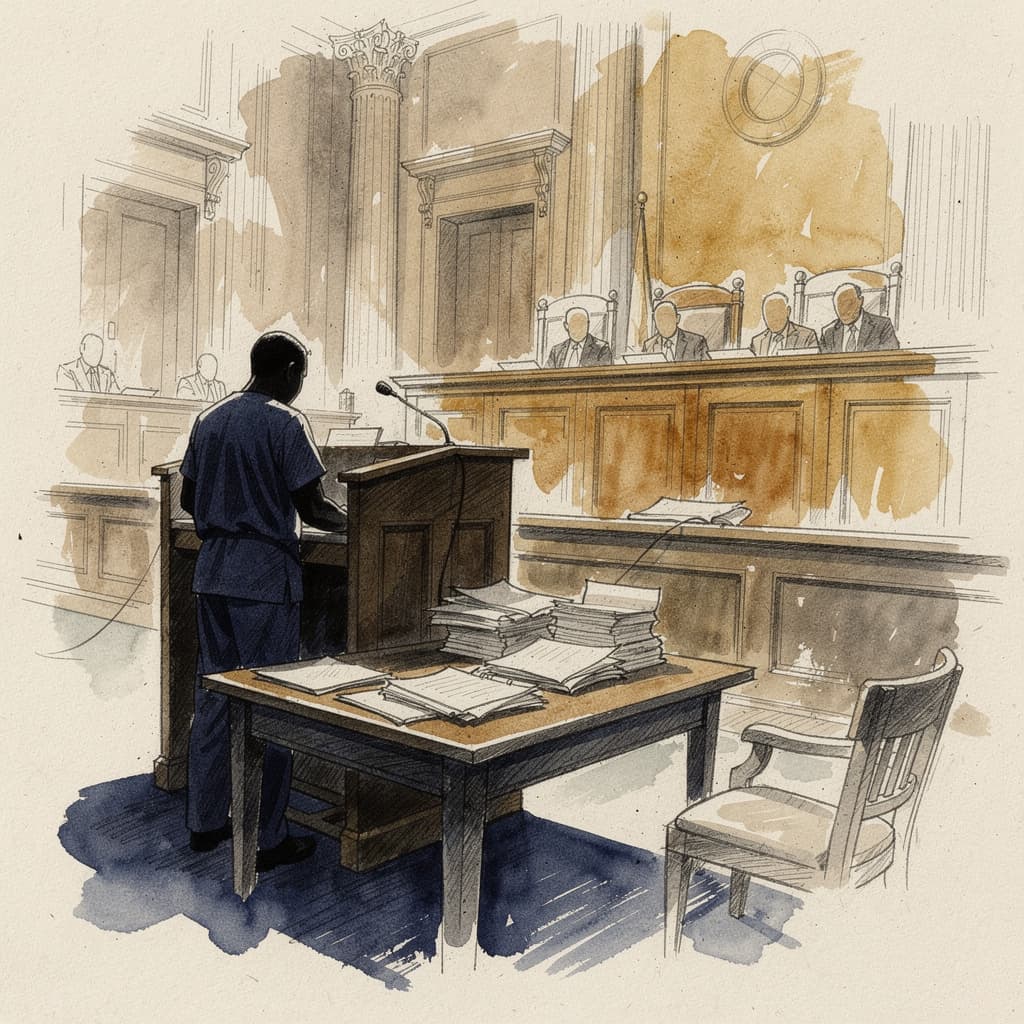
What it's about
The case arose after an inmate alleged that prison officials prevented him from filing grievances regarding sexual abuse and retaliation.
The case addresses how the Prison Litigation Reform Act's requirement to use available prison remedies fits with the constitutional right to a jury trial.
Question presented
In cases subject to the Prison Litigation Reform Act, do prisoners have a right to a jury trial concerning their exhaustion of administrative remedies where disputed facts regarding exhaustion are intertwined with the underlying merits of their claim?
What the Court decided
Holding
Parties are entitled to a jury trial on PLRA exhaustion when that issue is intertwined with the merits of a claim that requires a jury trial under the Seventh Amendment. 96 F. 4th 911, affirmed.
- Result
- Affirmed
The vote
From the opinions
“Parties are entitled to a jury trial on PLRA exhaustion when that issue is intertwined with the merits of a claim that requires a jury trial under the Seventh Amendment.”
“The jury right conferred by the Seventh Amendment does not depend on the degree of factual overlap between a threshold issue and the merits of the plaintiff ’s claim.”
What's next
Lower courts must apply this rule in Prison Litigation Reform Act cases with overlapping exhaustion and merits disputes. Perttu's case proceeds under the affirmed Sixth Circuit decision.
Documents
Docket activity
New analysis added
AI analysis generated: Case Briefing
AI analysis generated: Decision Record
New analysis added
AI analysis generated: Impact Analysis
Show 7 moreShow fewer
AI analysis generated: Opinion Summary
Status changed from unknown to unknown
Status changed from unknown to unknown
Opinion added: Perttu
Opinion added: opinion
Audio Recording added: Oral Arguments - Perttu
Status changed from unknown to unknown
More questions
- What did the Supreme Court rule in Perttu v. Richards?
- The Court said a jury must decide exhaustion disputes when the facts overlap with the merits of a claim requiring a jury trial.
- Who won Perttu v. Richards?
- Thomas Perttu won. The Court affirmed the Sixth Circuit's decision by a 5-4 vote.
- What does Perttu v. Richards mean for prisoners?
- Prisoners may have a jury decide whether prison grievance procedures were available when that question overlaps with the facts of their claims.
- Is the jury-trial rule still the law after Perttu v. Richards?
- Yes. Courts must provide a jury trial on intertwined exhaustion and merits issues for claims requiring a jury under the Seventh Amendment.
- What happens next in Perttu v. Richards?
- The case proceeds under the affirmed Sixth Circuit decision. Lower courts must follow the Supreme Court's rule in similar cases.
Sources
Primary materials plus reporting. Best-effort analysis: this explainer relies on a mix of primary materials and trusted secondary sources. Official filings and opinions remain authoritative.