Nuclear Regulatory Commission v. Texas
In brief
Only formal parties to an NRC licensing proceeding may challenge its final order in court, and private off-reactor spent-fuel storage licensing remains authorized.
- Where it stands
- Decided
Decided 6-3 · June 18, 2025 · Opinion by Justice Kavanaugh
- What it’s about
- The Supreme Court ruled that only parties who formally intervened in the Nuclear Regulatory Commission's licensing proceedings can challenge its final orders in court under the Hobbs Act, and affirmed the Commission's authority to license private facilities for storing spent nuclear fuel away from reactor sites.
- Who it affects
- People, companies, and states that want to challenge an NRC final order must first become formal parties in the agency case. The decision also allows private companies to seek NRC licenses for off-reactor spent-fuel storage facilities.
Summary: written with AI from the case record.
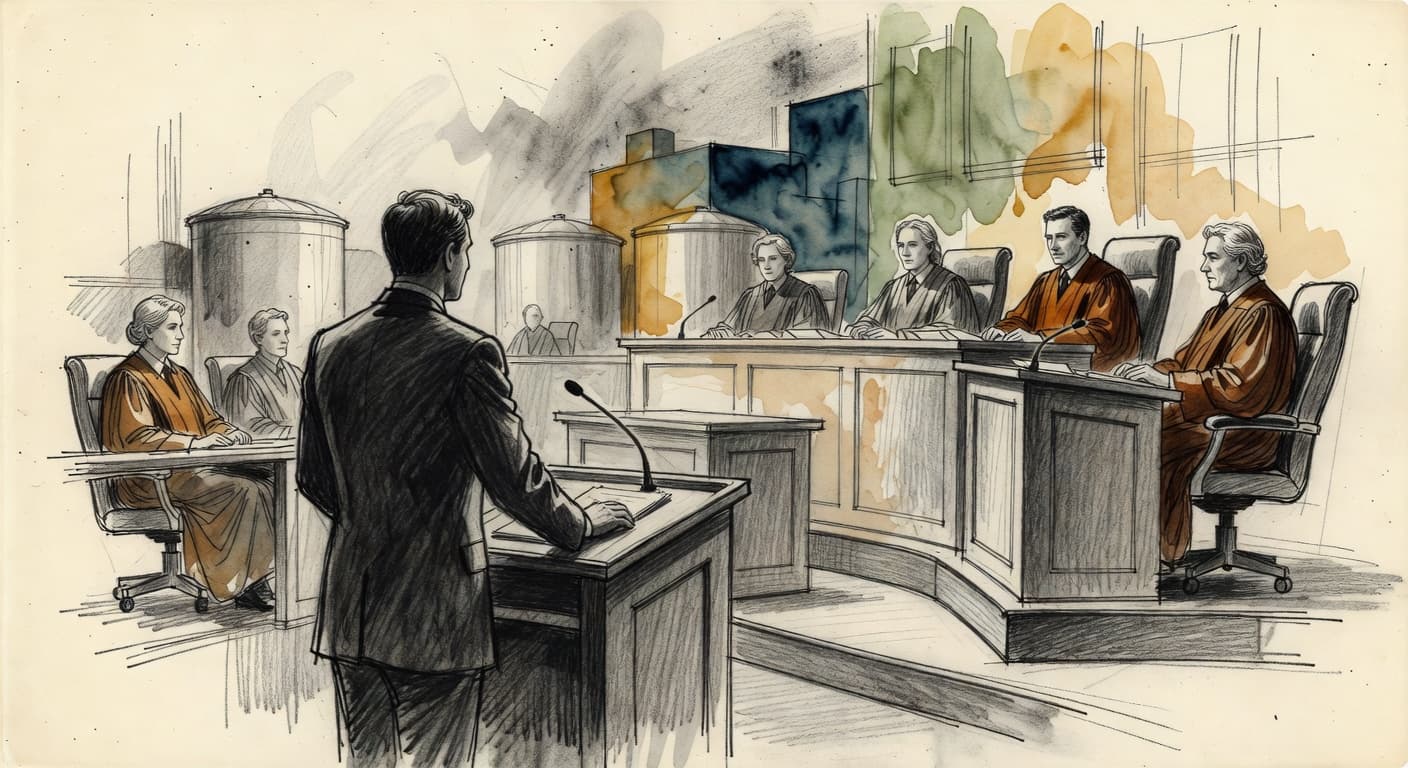
What it's about
The case concerns both access to federal courts and federal control over where spent nuclear fuel may be stored.
Question presented
1. Can a nonparty challenge a federal agency’s “final order” under the Hobbs Act’s judicial review provision? 2. Do federal nuclear laws allow the Nuclear Regulatory Commission to license private companies to store spent nuclear fuel at off-reactor sites?
What the Court decided
Holding
Because Texas and Fasken were not parties to the Commission’s licensing proceeding, they are not entitled to obtain judicial review of the Commission’s licensing decision. 78 F. 4th 827, reversed and remanded.
- Result
- Reversed
The vote
From the opinions
“Because Texas and Fasken were not parties to the Commission’s licensing proceeding, they are not entitled to obtain judicial review of the Commission’s licensing decision.”
“The agency’s decision was unlawful.”
What's next
Lower courts will apply the formal-party requirement when reviewing NRC licensing challenges. States, landowners, and other affected groups seeking review will need to intervene during the NRC proceeding.
Documents
Docket activity
New analysis added
AI analysis generated: Impact Analysis
AI analysis generated: Opinion Summary
New analysis added
AI analysis generated: Case Briefing
Show 7 moreShow fewer
AI analysis generated: Decision Record
Status changed from unknown to unknown
Status changed from unknown to unknown
Opinion added: NRC
Opinion added: opinion
Audio Recording added: Oral Arguments - NRC
Status changed from unknown to unknown
More questions
- What did the Supreme Court rule in Nuclear Regulatory Commission v. Texas?
- The Court ruled that Texas and Fasken could not challenge the NRC license because they were not formal parties in the licensing proceeding.
- Who won Nuclear Regulatory Commission v. Texas?
- The Nuclear Regulatory Commission and the other petitioners won. The Court affirmed the Commission's authority to license private interim spent-fuel storage sites.
- What does Nuclear Regulatory Commission v. Texas mean for nearby landowners?
- Nearby landowners who want to challenge an NRC licensing order must formally intervene in the agency proceeding before seeking court review.
- Is private off-reactor spent-fuel storage still authorized after Nuclear Regulatory Commission v. Texas?
- Yes. The Court affirmed the NRC's authority to license private facilities that store spent nuclear fuel away from reactor sites.
- How can states challenge an NRC licensing decision after Nuclear Regulatory Commission v. Texas?
- They must first become formal parties in the NRC licensing proceeding. Only then may they seek judicial review of a final NRC order.
Sources
Primary materials plus reporting. Best-effort analysis: this explainer relies on a mix of primary materials and trusted secondary sources. Official filings and opinions remain authoritative.