Janice Hughes Barnes, Individually and as Representative of the Estate of Ashtian Barnes, Deceased v. Roberto Felix, Jr.
In brief
Police-force claims must be judged using the full set of relevant circumstances rather than only the immediate moment of perceived danger.
- Where it stands
- Decided
Decided 9-0 · May 15, 2025 · Opinion by Justice Kagan
- What it’s about
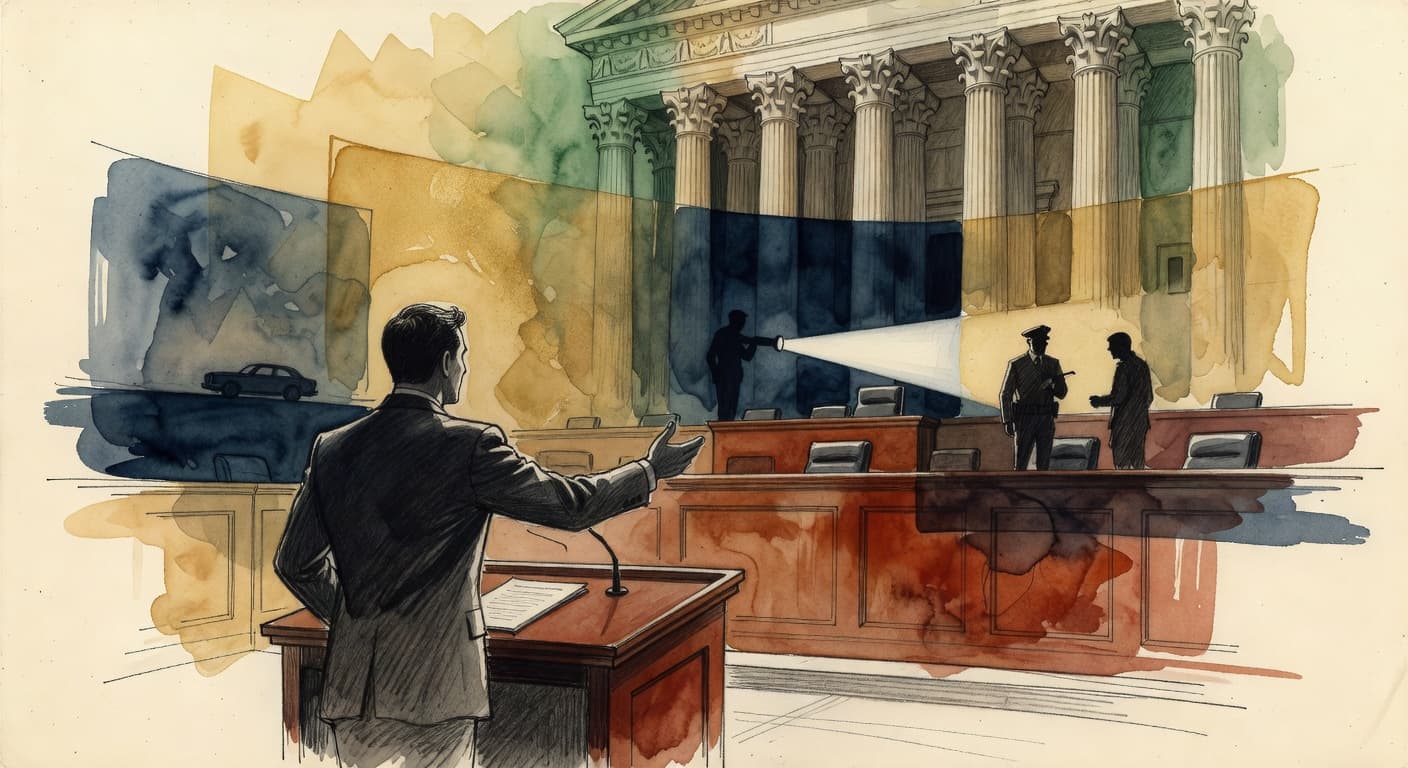
- The Supreme Court unanimously struck down the Fifth Circuit's "moment of the threat" doctrine, ruling that Fourth Amendment excessive force claims must be evaluated based on the totality of the circumstances rather than solely the split-second an officer uses force.
- Who it affects
- Courts must now consider relevant events leading up to a police shooting or other use of force. For example, a person alleging excessive force can point to earlier parts of a traffic stop, not just the final moment.
Summary: written with AI from the case record.
What it's about
The decision clarifies that courts must consider relevant events leading up to a shooting, not just the immediate instant of the threat.
The decision reinforces that Fourth Amendment reasonableness depends on the full context of an encounter between police and the public.
Question presented
Should courts apply the “moment of the threat” doctrine when evaluating an excessive force claim under the Fourth Amendment?
What the Court decided
Holding
A claim that a law enforcement officer used excessive force during a stop or arrest is analyzed under the Fourth Amendment, which requires that the force deployed be objectively reasonable from “the perspective of a reasonable officer at the scene.” Graham v. Connor , 490 U. S. 386, 396. The inquiry into the reasonableness of police force requires analyzing the “totality of the circumstances.” County of Los Angeles v. Mendez , 581 U. S. 420, 427–428; Tennessee v. Garner , 1, 9. That analysis demands “careful attention to the facts and circumstances” relating to the incident. Graham , 490 U. S., at 396. Most notable here, the “totality of the circumstances” inquiry has no time limit. 91 F. 4th 393, vacated and remanded.
- Result
- Vacated
The vote
- Joined the judgment
- Concurred in a separate opinion
- Wrote an opinion
From the opinions
“The “totality of the circumstances” inquiry has no time limit.”
What's next
The case returns to the lower courts for reconsideration under the Supreme Court's totality-of-the-circumstances rule. Courts and law-enforcement agencies must account for that broader review in excessive-force cases.
Documents
Docket activity
New analysis added
AI analysis generated: Case Briefing
New analysis added
AI analysis generated: Impact Analysis
AI analysis generated: Opinion Summary
Show 7 moreShow fewer
New analysis added
AI analysis generated: Decision Record
Status changed from unknown to unknown
Status changed from unknown to unknown
Opinion added: Barnes
Opinion added: opinion
Audio Recording added: Oral Arguments - Barnes
More questions
- What did the Supreme Court rule in Barnes v. Felix?
- The Court rejected the Fifth Circuit's moment-of-the-threat doctrine. It required courts to consider the totality of the circumstances in excessive-force claims.
- Who won Barnes v. Felix?
- The estate prevailed on the legal question before the Supreme Court. The lower courts must now reconsider the claim under the Court's rule.
- How does Barnes v. Felix affect excessive-force cases?
- Judges must consider relevant events leading up to force, not just the instant it was used. This affects people bringing claims and officers defending their actions.
- Is the moment-of-the-threat doctrine still the law after Barnes v. Felix?
- No. The Supreme Court rejected that doctrine and vacated the Fifth Circuit's decision.
Sources
Primary materials plus reporting. Best-effort analysis: this explainer relies on a mix of primary materials and trusted secondary sources. Official filings and opinions remain authoritative.