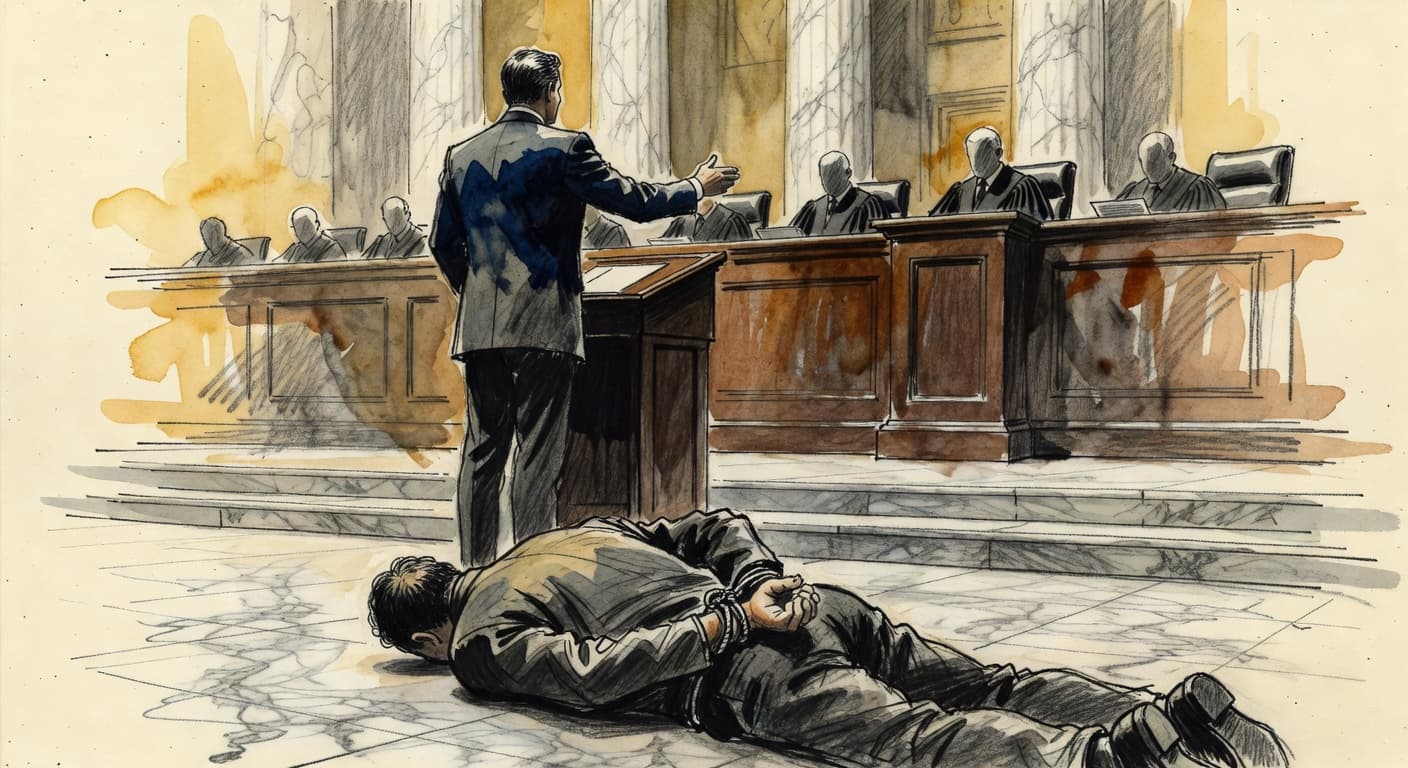
N.S. v. Kansas City Board of Police
This case involves a legal dispute between an individual identified as N.S. and the Kansas City Board of Police, appealed from the Eighth Circuit. The petition sought review of a lower court decision involving the standard for granting summary judgment.
- Status
- Dismissed
- Appeal from
- United States Court of Appeals for the Eighth Circuit
Case briefing
Case snapshot
What happened
The Supreme Court declined to hear the case of N.S. v. Kansas City Board of Police, which challenged a lower court's ruling on qualified immunity (a rule that protects government officials from being sued unless they violate clearly established law). The lower court had ruled that police officers could not be sued for using a 'prone restraint' (pinning someone face down) on a handcuffed person because there was no specific past case saying that exact action was illegal. By denying the petition, the Supreme Court let the lower court's decision stand.
Why it matters
This decision means that in certain states, it remains very difficult to sue police officers for using dangerous physical restraints if a nearly identical case hasn't happened before. This affects individuals who claim their rights were violated by police but cannot find a specific legal 'twin' to their situation in past court records. It reinforces the high bar victims must clear to hold law enforcement accountable in court.
The big picture
The case was part of a larger national debate over qualified immunity and whether it gives police too much protection from lawsuits. Critics argue the doctrine prevents justice for victims of police misconduct, while supporters say it is necessary so officers can do their jobs without fear of constant litigation. The Court's refusal to take the case suggests it is not yet ready to reconsider how this legal rule works.
What the justices said
The Supreme Court denied the petition for a writ of certiorari (a request for the Court to review the case) on June 30, 2023.
The bottom line
The Supreme Court will not review the rules regarding qualified immunity in this case, leaving the lower court's protection for the officers in place.
What's next
Watch for how lower courts, agencies, or affected parties respond to the ruling. Because the Supreme Court did not change the law, the current standards for qualified immunity in the Eighth Circuit will continue to apply to future police misconduct claims. Legal advocates may look for other cases to bring before the Court to challenge these immunity rules again.
What was the core dispute in this case?
The dispute centered on whether police should be immune from a lawsuit after using a prone restraint on a handcuffed person. The petitioner argued the law was clear enough that the officers should have known their actions were wrong.
What are the real-world consequences of the Court's decision?
Victims of police force in the Eighth Circuit may find it harder to win civil rights lawsuits. If their specific situation hasn't been ruled on before, officers will likely receive qualified immunity.
What is the legal rule at the center of this petition?
The case focused on the 'clearly established' prong of qualified immunity. This rule requires a plaintiff to show that a previous court case already declared the specific police conduct unconstitutional.
What is the next procedural step for this case?
Since the Supreme Court denied the petition, the case is effectively over. The ruling from the United States Court of Appeals for the Eighth Circuit remains the final word.
How does this fit into a broader legal trend?
This follows a trend where the Supreme Court often declines to limit or remove qualified immunity. Despite public pressure for reform, the Court continues to uphold the doctrine in most instances.
Where things stand
Timeline
Source note
How this page is sourced
Official case materials anchor this page. Reporting is used only to add context and explain the dispute in plain English.
Page data last refreshed Mar 31, 2026.
Primary materials
Documents & resources
Key filings
Recent coverage
In the news
More to watch