Police force on restrained people
Lombardo v. Louis
In brief
The Supreme Court left the force questions open, wiped out the Eighth Circuit’s ruling, and sent the case back for fact-focused review.
- Where it stands
- Decided
Decided · June 28, 2021 · Per curiam
- What it’s about
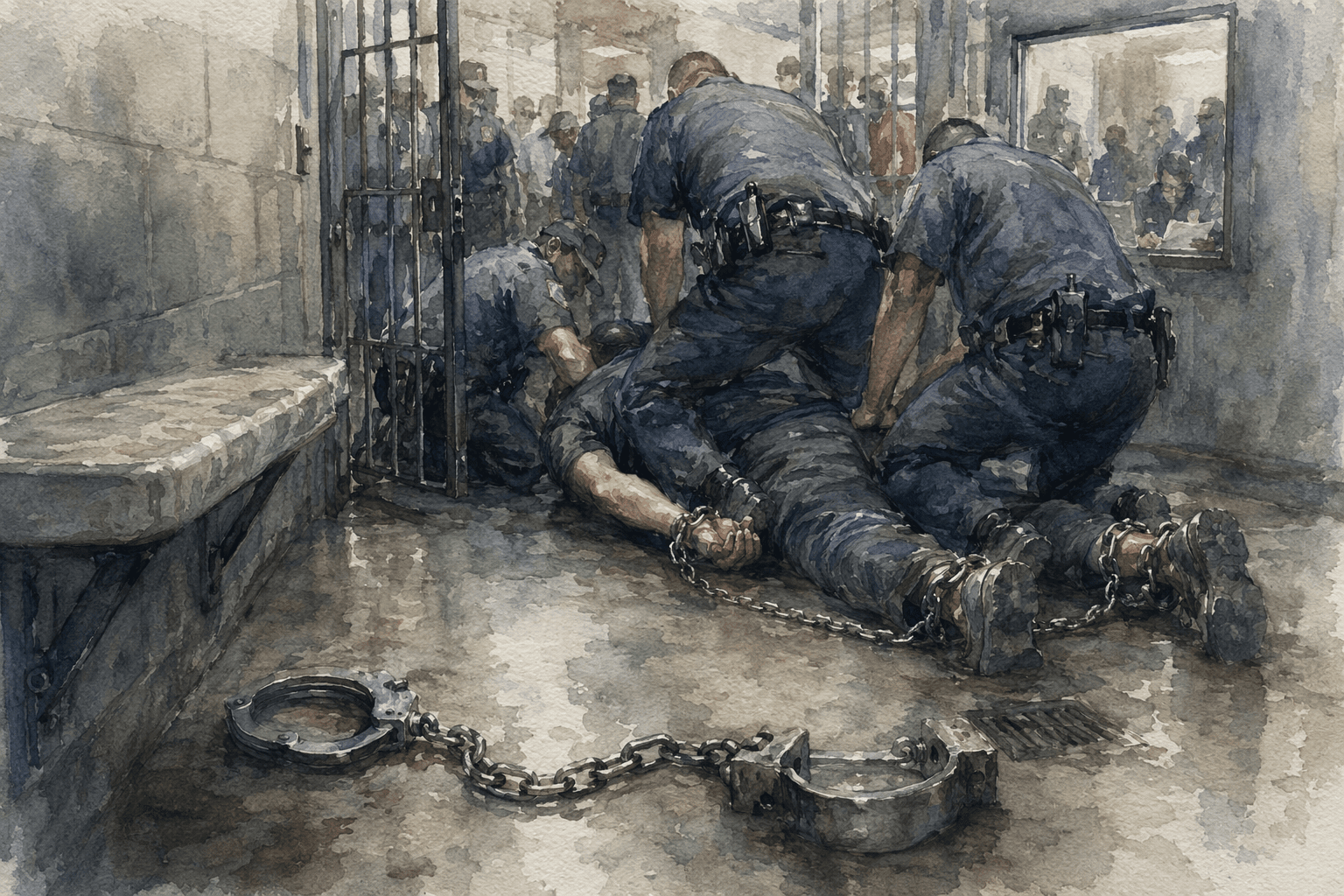
- This case is about whether St. Louis police used too much force after arresting Nicholas Gilbert, when officers handcuffed and shackled him in a holding cell, pinned him face-down, and pressed on his back until he
- Who it affects
- The Eighth Circuit now has the opportunity to revisit the case using an inquiry that clearly considers the facts and circumstances.
Summary: written with AI from the case record.
What it's about
This case shows that the Supreme Court can send a police-force dispute back for fact-focused review without deciding which side ultimately wins.
Question presented
Whether a reasonable jury could find that officers used excessive force when they put a handcuffed and shackled person face-down on the ground and pressed into his back until he suffocated.
What the Court decided
Holding
The Court expresses no view as to whether the officers used unconstitutionally excessive force or, if they did, whether Gilbert's right to be free of such force in these circumstances was clearly established at the time of his death. The Court instead grants the petition for certiorari, vacates the judgment of the United States Court of Appeals for the Eighth Circuit, and remands the case to give the court the opportunity to employ an inquiry that clearly attends to the facts and circumstances in answering those questions in the first instance. Opinion per curiam. Justice Alito, with whom Justice Thomas and Justice Gorsuch join, dissenting.
- Result
- Vacated
From the opinions
“I cannot approve the Court’s summary disposition because it unfairly interprets the Court of Appeals’ decision and evades the real issue that this case presents: whether the record supports summary judgment in favor of the defendant police officers and the city of St. Louis.”
What's next
The case goes back to the Eighth Circuit for an inquiry that clearly considers the facts and circumstances. The Supreme Court’s order leaves the final outcome open.
Why it matters
Whether the officers used excessive force, and whether the law clearly protected Gilbert from it when he died, remain unresolved.
Documents
Opinions
Key filings
Docket activity
New analysis added
AI analysis generated: Case Briefing
AI analysis generated: Decision Record
Case data updated: status, opinion_date
Opinion added: Opinion
Show 1 moreShow fewer
Brief added: Petition
More questions
- What was Lombardo v. St. Louis about?
- It asked whether a reasonable jury could find that officers used too much force. The officers put handcuffed and shackled Nicholas Gilbert face-down and pressed on his back until he suffocated.
- What did the Supreme Court do in Lombardo v. St. Louis?
- The Court wiped out the Eighth Circuit’s ruling and sent the case back for a fact-focused inquiry, without deciding whether the force was unconstitutional.
- Did the Court decide whether the officers used excessive force?
- No. The Court left open both whether the force violated the Constitution and whether the law clearly protected Gilbert from it when he died.
- What happens next for Lombardo?
- The case returns to the Eighth Circuit for an inquiry that clearly considers the facts and circumstances. The Supreme Court’s order leaves the final outcome open.
Sources
Primary materials plus reporting. Best-effort analysis: this explainer relies on a mix of primary materials and trusted secondary sources. Official filings and opinions remain authoritative.