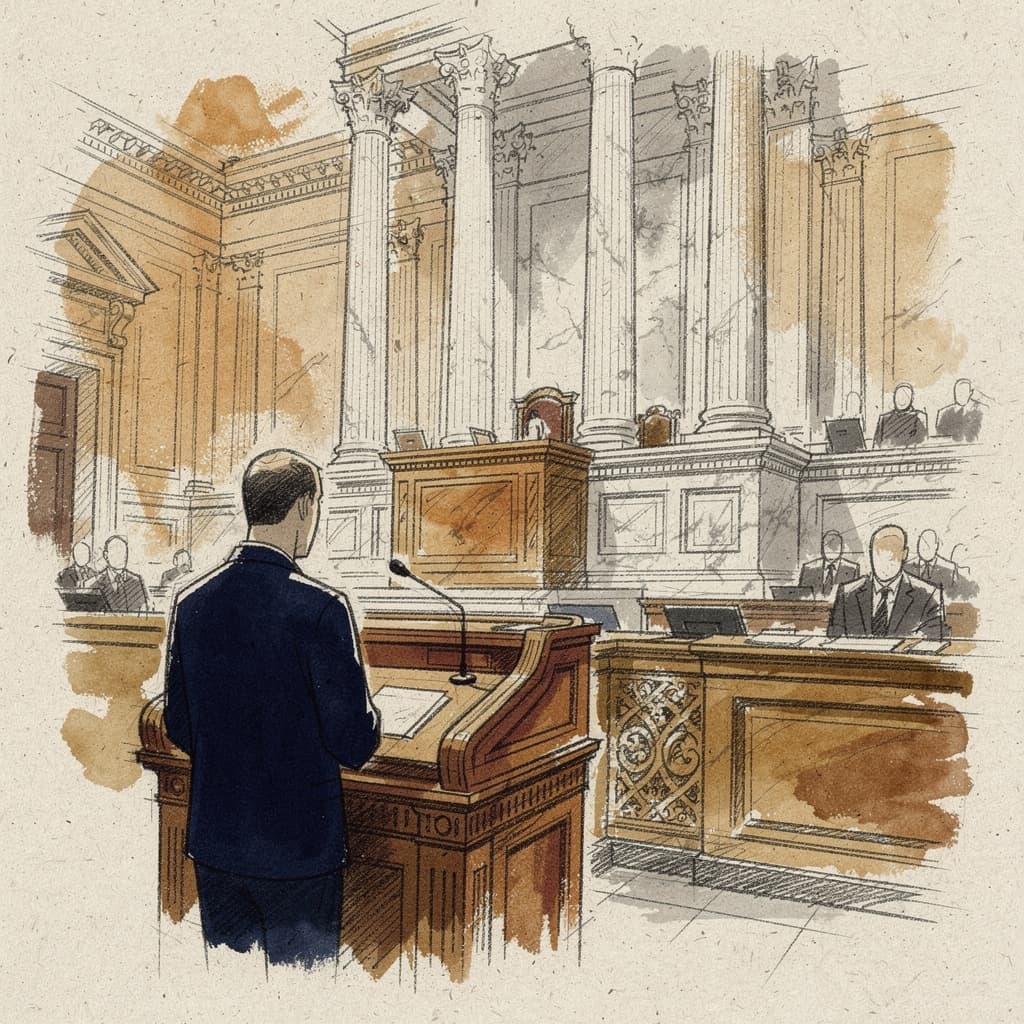
Valencia v. California
This case involves a petition for a writ of certiorari filed by Valencia to review a decision by the Court of Appeal of California, Second Appellate District.
- Status
- Dismissed
- Appeal from
- Court of Appeal of California, Second Appellate District
Case briefing
Case snapshot
What Happened
The Supreme Court was asked to decide if the Sixth Amendment allows prosecutors to use out-of-court statements from expert witnesses who do not testify in person. This case came from a California court where a defendant argued that using such statements violated his right to confront his accusers. The Court ultimately denied the petition for a writ of certiorari (a request for the Court to review the case), meaning the lower court's decision stands.
Why It Matters
This case affects how evidence is presented in criminal trials, specifically when forensic or expert reports are used without the author being present. If these statements are allowed, defendants may lose the chance to cross-examine (question) the people whose work is being used to convict them. This impacts anyone facing criminal charges where lab results or expert opinions are key evidence.
The Big Picture
The Confrontation Clause is a constitutional rule meant to ensure that testimony against a defendant is tested in open court. Over the years, the Supreme Court has struggled to define exactly which types of out-of-court statements count as 'testimony' that requires a witness to appear. This case is part of a long-running debate over how to balance modern legal efficiency with ancient trial rights.
What the Justices Said
The Supreme Court denied the petition for a writ of certiorari on May 4, 2020. No substantive justice or advocate reactions are available yet regarding the specific reasoning for the denial.
The Bottom Line
The Supreme Court declined to hear the case, leaving the California court's ruling in place regarding the use of expert statements.
What's Next
Watch for how lower courts, agencies, or affected parties respond to the ruling. Because the Supreme Court did not issue a new national rule, different states may continue to handle expert testimony in different ways.
What was the core dispute in this case?
The case centered on whether the Sixth Amendment prevents prosecutors from using expert statements if the expert does not testify. The defendant argued this violated his right to confront witnesses.
What are the real-world consequences of the Court's decision?
By not hearing the case, the Court allowed the existing California ruling to stand. This means local rules for admitting expert evidence will remain unchanged for now.
What legal rule was at the center of this petition?
The case focused on the Confrontation Clause of the Sixth Amendment. This rule generally requires that witnesses against a defendant must appear in court for questioning.
What is the next procedural step for this case?
Since the Supreme Court denied the request for review, the legal process for this specific petition is over. Observers will now watch how other lower courts handle similar evidence issues.
How does this case fit into a broader legal trend?
This case reflects the ongoing uncertainty over how the Confrontation Clause applies to forensic reports. Courts across the country remain divided on when an expert must testify in person.
Where things stand
Timeline
Source note
How this page is sourced
Official case materials anchor this page. Reporting is used only to add context and explain the dispute in plain English.
Page data last refreshed Mar 30, 2026.
Context reporting
Primary materials
Documents & resources
Recent coverage
In the news
More to watch