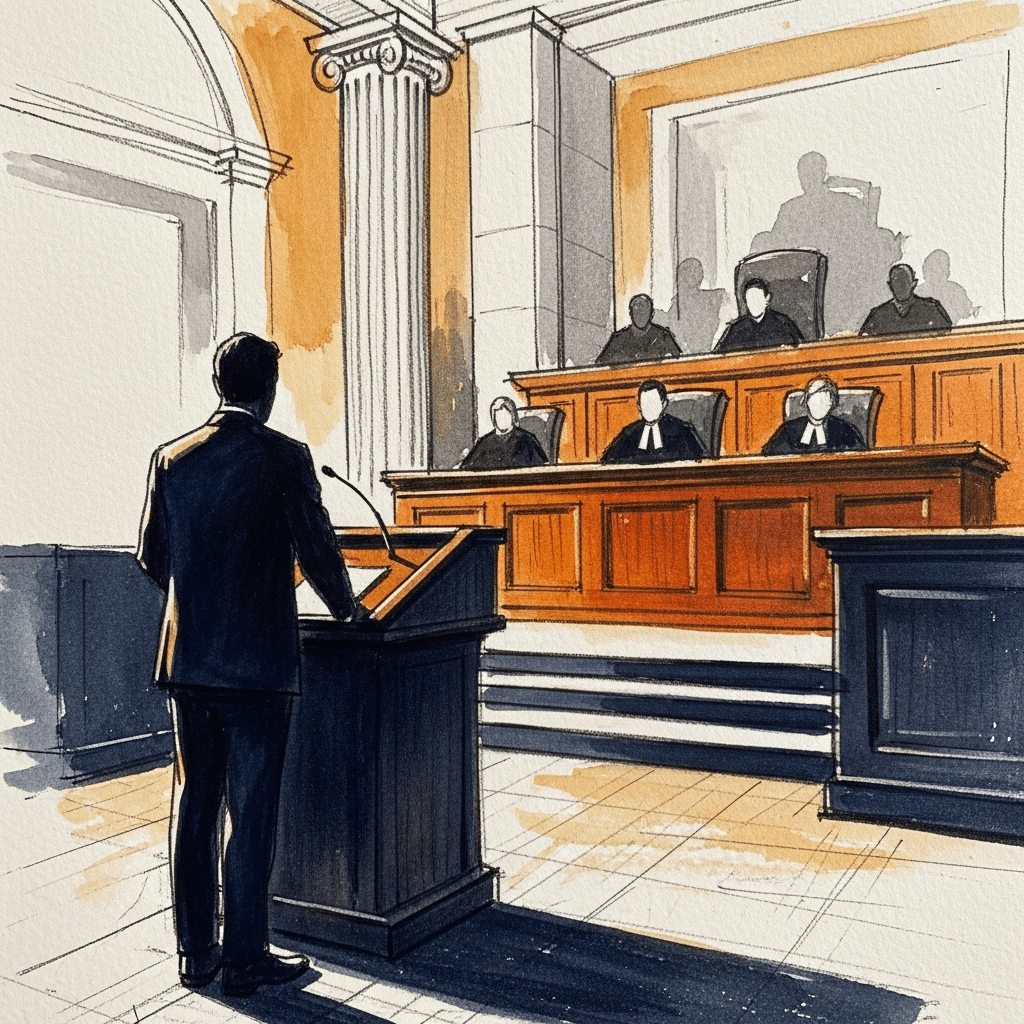
Murphy v. Office of Disciplinary Counsel
This case involves a petition for a writ of certiorari filed by Murphy against the Office of Disciplinary Counsel, arising from a decision by the Supreme Court of Pennsylvania.
- Status
- Dismissed
- Appeal from
- Supreme Court of Pennsylvania, Eastern District
Case briefing
Case snapshot
What Happened
An attorney is asking the Supreme Court to decide if lawyers can be punished for criticizing judges without proof they lied on purpose. The case comes from a Pennsylvania court decision that disciplined a lawyer for his speech about a member of the judiciary.
Why It Matters
This case will determine how much freedom lawyers have to speak out against judges they believe are acting unfairly. If the Court rules against the attorney, lawyers might be afraid to report judicial misconduct for fear of losing their licenses.
The Big Picture
The Supreme Court must decide if the 'actual malice' standard, which protects speech unless it is a known lie, applies to lawyers. This balances the First Amendment right to free speech against the state's interest in keeping the public's trust in the court system.
What the Justices Said
No substantive justice or advocate reactions are available yet as the case is in the petition stage.
The Bottom Line
The Court is being asked to decide if attorneys have the same free speech protections as the general public when criticizing judges.
What's Next
The Supreme Court will first decide whether to grant certiorari (the decision to hear the case). If they accept it, the parties will submit full legal briefs and schedule oral arguments.
What is the core dispute in this case?
The case focuses on whether a lawyer can be disciplined for speech about a judge based on an 'objective reasonableness' test. The attorney argues the state must prove 'actual malice' instead.
What are the real-world consequences for attorneys?
Attorneys may face professional discipline or lose their licenses for criticizing the judiciary. This could discourage lawyers from speaking up about potential problems in the legal system.
What legal rule is the Court being asked to clarify?
The Court is looking at the 'actual malice' standard from New York Times Co. v. Sullivan. This rule usually requires proof that someone knew a statement was false.
What is the next procedural step for this case?
The Court must decide if it will hear the case by reviewing the petition for a writ of certiorari. If denied, the lower court's ruling against the lawyer stands.
How does this fit into a broader trend?
This case is part of a larger debate over how the First Amendment protects professional speech. It tests whether certain jobs require people to give up some of their speech rights.
Where things stand
Timeline
Source note
How this page is sourced
Official case materials anchor this page. Reporting is used only to add context and explain the dispute in plain English.
Page data last refreshed Mar 31, 2026.
Context reporting
Primary materials
Documents & resources
Key filings
Recent coverage
In the news
More to watch